Dialect Film Preservation
(Ministry of Digital Development & Information)
-
Mr Cai Yinzhou asked the Acting Minister for Culture, Community and Youth (a) what are the Speak Mandarin Campaign's current stated policy objectives; (b) whether the Ministry will review the campaign's continued application to locally screened dialect films, given that over-the-top and social media platforms do not carry the same restriction; and (c) whether the Ministry has assessed whether mandatory Mandarin dubbing of dialect films has any measurable effect on the campaign.
The Acting Minister for Culture, Community and Youth (Mr David Neo): Mr Speaker, my response will address Question Nos 3 to 5 by Mr Cai Yinzhou and Ms Eileen Chong Pei Shan on the Speak Mandarin Campaign in today’s Order Paper.
Sir, Question Nos 6 to 12 on today's Order Paper addresses the use of dialects in films. The two sets of questions, while distinct, are related. So, may I seek your permission to allow the Ministry of Digital Development and Information (MDDI) to provide the answers to Question Nos 6 to 12, before the Ministry of Culture, Community and Youth, and MDDI address any supplementary questions that Members may have? Members may be better informed after hearing both sets of responses and that might give better clarity to our discussions.
Mr Speaker: Yes, you may. Please proceed.
Mr David Neo: The Speak Mandarin Campaign was launched in 1979. By promoting a common language across the Chinese community, it helps Chinese Singaporeans from different dialect backgrounds to communicate with one another and it preserves access to the Chinese culture through Mandarin, rather than through separate dialects.
By simplifying the linguistic environment, it also gives our bilingual policy the best chance to succeed. These objectives remain valid today.
The Promote Mandarin Council, which comprises distinguished private and public individuals across all different sectors who are volunteers, regularly reviews the campaign to keep its framing, approach and objectives relevant and meaningful in Singapore's multicultural context. It is important to do so as the language environment continues to evolve.
Singapore families are using English more at home and much as our young want to be better at Mandarin, the opportunities to do so may be insufficient. So, hence the campaign has evolved from promoting Mandarin as a common language, to strengthening their appreciation for our Singapore Chinese cultural identity and making the learning of Mandarin fun and enjoyable. Its current tag line, "讲华语,我也可以",or "Speak Mandarin? Yes, I can", encourages everyone to learn Mandarin even as English becomes more dominant in daily life.
In education, the Ministry of Social and Family Development and the Ministry of Education are setting aside more curriculum time to expose young Chinese students to Mandarin. For older students, we provide opportunities to those with the aptitude and interest to develop into bicultural talents. It is a challenging task and our Chinese teachers are working very hard. We will continue to do our best to continue to uphold the bilingual policy.
As the use of English continues to displace mother tongues, the use of dialects in Singapore, has continued to decline. We increasingly see dialect artistic materials, not as competing against the use of Mandarin, but as part of our heritage and cultural practices that deepen Singaporeans' appreciation of our cultural heritage. Hence, the National Arts Council supports arts groups that practises traditional forms of dialect cultures such as the Siong Leng Musical Association, which preserves Nanyin and Nam Hwa Opera, the Teochew opera group. The National Heritage Board recognises and supports practitioners and groups that transmit Chinese dialect culture. Clan associations, such as the Singapore Hokkien Huay Kuan or the Teochew Poit Ip Huay Kuan and Hainan Hwee Kuan also conduct regular dialect classes for interested Singaporeans.
Our linguistic diversity and heritage are distinctive parts of Singapore Chinese culture. The Government welcomes ideas to preserve dialect cultures while upholding the importance of Mandarin. We will continue to take in feedback and we will work with the community to consider carefully what further steps are appropriate to support and to promote our distinctive Singapore Chinese culture within our multicultural society.
Link to Hansard: Link
-
Mr Cai Yinzhou asked the Minister for Digital Development and Information (a) what factors are taken into account in Infocomm Media Development Authority's (IMDA) decision for the film "Dear You" to be dubbed in Mandarin for general screening instead of the original Teochew version; (b) whether heritage and cultural preservation value formed part of the assessment; and (c) whether IMDA will consider giving greater weight to heritage and cultural preservation value in future assessments.
Mr Tan Kiat How: Mr Speaker, my response will cover the questions raised by Mr Cai Yinzhou, Mr Gerald Giam, Mr Kenneth Tiong, Mr Saktiandi Supaat, Mr Dennis Tan, Ms Valerie Lee, Mr Liang Eng Hwa and Dr Neo Kok Beng in today's Order Paper, as well as related questions by Mr Darryl David1 and Ms Mariam Jaafar2 for subsequent Sittings. If Members are satisfied with the response, they may wish to withdraw their questions after this session.
Guidelines on language use in media are implemented by the Infocomm Media Development Authority (IMDA). They support the Government's longstanding policy to promote Mandarin as one of four official languages and have generally served us well. However, as noted in the Ministry of Culture, Community and Youth's (MCCY's) earlier reply today, Singapore's language environment has evolved. Recognising this, in implementing the guidelines, IMDA has exercised greater flexibility to allow more dialect content in films.
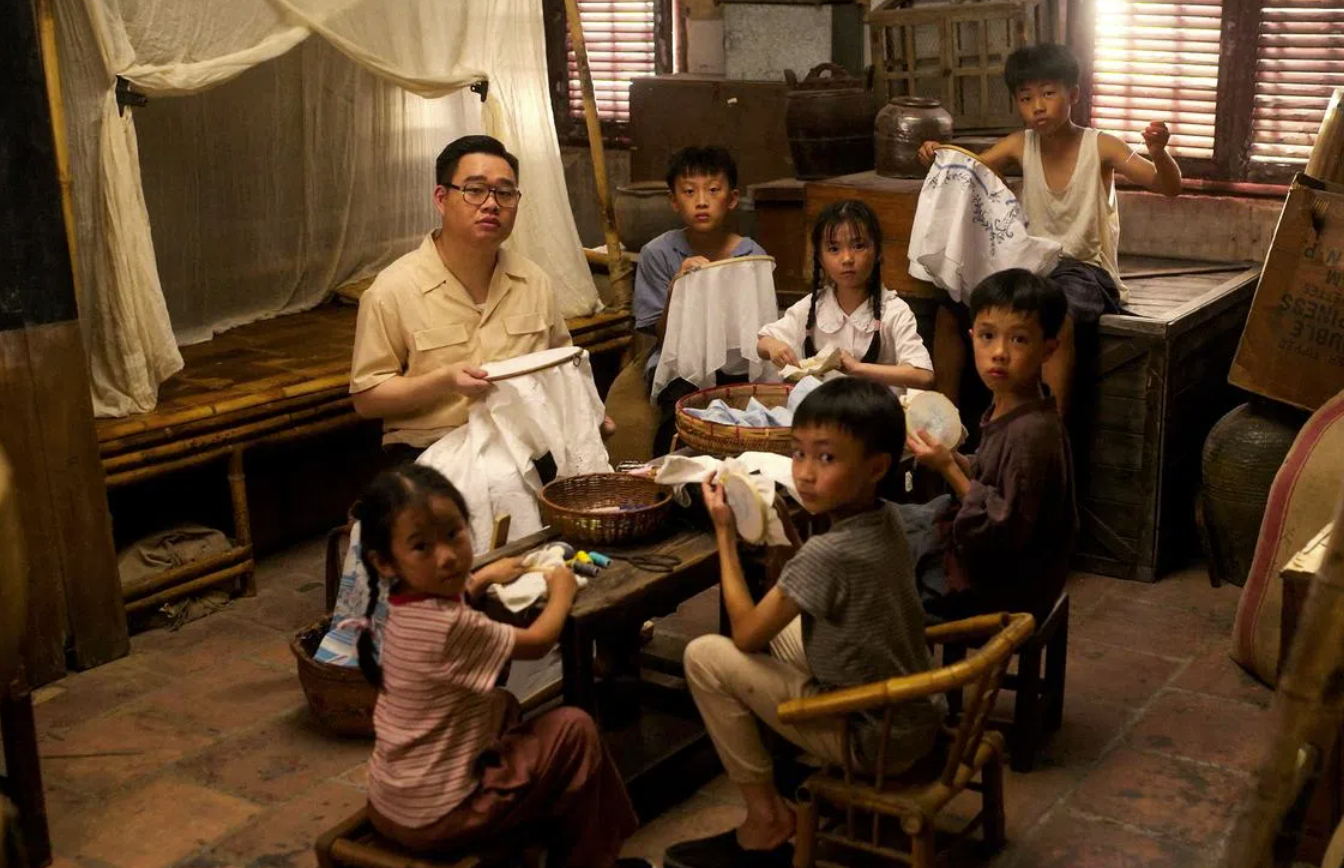
Each year, around 30 to 40 dialect films are screened at film festivals. At the same time, IMDA has allowed unrestricted screenings of films with substantial use of dialect, such as "881", "Long Long Time Ago" and "Wonderland". For the film "Dear You", IMDA has approved a total of 272 screenings of the Teochew version and is prepared to approve additional screenings should the film distributor request them in response to audience demand.
Beyond these implementation changes, several Members have called for the guidelines themselves to be reviewed. We recognise that the circumstances have changed since the guidelines were first introduced. There is, therefore, scope to consider how we can expand the space for dialects, while continuing to uphold the importance of Mandarin. In doing so, we should also take into account the different media platforms. For example, there are no dialect restrictions for arts performances or content available on the Internet and online streaming services. On free-to-air television and radio, we believe that Mandarin should continue to be the mainstay. For cinemas, we are prepared to allow more screenings of dialect-language films, so as to provide audiences with greater access to such content. We appreciate the feedback from Members and will carefully consider what further steps are appropriate.
Mr Cai Yinzhou (Bishan-Toa Payoh): Thank you, Speaker. I would like to declare my interest as Advisor to Chinatown Heritage Centre, an attraction referencing 1950s' Singapore, with our exhibits featuring dialect content. "Parasite" sparked conversations on inequality. "How to Make Millions before Grandma Dies" spurred end-of-life conversations. "Dear You" has renewed interest in the sacrifices of our forefathers and personal heritage. Locally, "Parasite" screened close to 12,000 sessions. "How to Make Millions before Grandma Dies" around 5,000. "Dear You", in Mandarin, 2,570; while its Teochew version, the original, a mere 126 public screenings as of early-July.
My first question to the Ministry of Digital Development and Information (MDDI) is, today, cinema is the only mainstream medium in Singapore where Chinese dialect content is restricted. Over-the-top (OTT) streaming on social media platforms and YouTube all already carry dialect content without equivalent restrictions. Should cinema remain subject to the campaign's dialect restriction rationale?
There is also a commercial case, our cinema operators have been under real pressure. "Dear You" shows that original dialect programming can be an asset, not a niche indulgence. "Dear You" has drawn families off their sofas and back into theatres, together across generations, including older Singaporeans, who, otherwise, might not step into a cinema at all. Would the Ministry go further in the review to consider removing this default restriction? In Mandarin, please.
师傅领进门,修行看个人。可是方言 艺术正面临一个更基本的问题。师傅老了,却没有年轻人进门。方言艺术 家逐渐凋零,后继无人,薪火难以相传。 请问文化、社区及青年部有什么具体方案,支持方言艺术的传承,让 它们在新加坡继续发展? 华语,是我们在社会里沟通的桥梁;方言,让我们在家中与阿公阿嫲 心连心。
As the saying goes, "The master leads you through the door, but the practice is yours to pursue." Yet dialect arts face a more fundamental problem today – the masters are growing old and no young people are walking through that door. Dialect artists are gradually passing on, with no one to carry the torch, and the flame risks being extinguished. What concrete plans does the MCCY have to support the preservation of dialect arts and ensure that they continue to thrive in Singapore?
Mandarin is the bridge that connects us in society. Dialect is what connects us, heart to heart, with our grandparents at home.
Mr Tan Kiat How: Sir, I thank the Member for his clarifications on the review of the use of dialect in cinema and films. As I have explained in my reply, we are getting feedback from different parties – industry stakeholders and community partners. We appreciate and welcome the conversations that have arisen from the "Dear You" screening.
Actually, just yesterday, I had a screening in my constituency for my residents – one theatre in Teochew, one theatre in Mandarin. I went by, spoke to my residents before my Meet-the-People Session.
It was very interesting. For the Teochew hall, almost all seniors, maybe some of the middle-aged people, like me, were there. Some were there because they wanted to hear the original Teochew dialect, some had watched the Mandarin one and wanted to hear the Teochew one. When I went to the Mandarin hall, it was very interesting. Some had actually watched the Teochew one and wanted to watch the Mandarin one because they could not quite understand the Teochew dialect, especially for non-Teochew speaking or non-native-Teochew speaking individuals.
But in addition to seniors, I was very pleasantly surprised to see many young people – children, secondary school, even primary school. They were there, accompanying their grandparents, parents and it was very good to see that it was a family affair. The young people, when I spoke to them, wanted to understand more about the environment in which their great-grandparents or grandparents had lived through in the early days of Independence.
The Member talked about screening of the original Teochew dialect of the film being popular. We have said that we will provide flexibility and we will continue to provide flexibility, in fact, the number that the Member cited has been updated in my reply, I said, 272, if the Member listened carefully just now. The film distributor knows that we will continue to provide flexibility.
So, in practice, if the film distributor feels that audience demand is there for the Teochew original film, we will provide flexibility. But more importantly, having a Mandarin version creates a bigger access to many more audiences in Singapore. Not just those who are speaking the dialect, especially our young people. So, there is value in having a Mandarin version of the film, in addition to being aligned with our broader language policy.
The Member mentioned OTT platforms, Internet streaming for example. Different platforms have, historically, been regulated differently based on different reach of audiences. Cinemas, being a public-regulated exhibition space in Singapore, ought to be seen closer to mainstream media. Having said that, as I have explained in my reply, we appreciate that the language environment has changed and we are prepared to see how we can expand access to dialect movies as we undertake our review.
Sir, I would just add that, over the years, it is not as if our guidelines have been static. We have been updating it, refining it, adapting them – for example, providing more flexibility of dialect use in films and in some of the mainstream radio stations and television channels. So, our policy, whilst remaining true to the policy intent of the larger language policy in Singapore, the implementation of it has evolved, has been flexible, pragmatic, taking into consideration the language environment. I mentioned earlier in my reply, some of the local movies, like "881", have substantive dialect content in the film. We look at the historical context, the heritage value and if it reflects Singapore stories. IMDA has taken a flexible, pragmatic approach and we will continue to do so.
The Acting Minister for Culture, Community and Youth (Mr David Neo): Mr Speaker, to answer the Mandarin portion of the Member's question and in the spirit of the Speak Mandarin Campaign, if you would allow me to take this supplementary question in Mandarin.
方言艺术是我们传统艺术很重要的一部 分。国家艺术理事会(艺理会)多年来也非常积极地支持与栽培华族方言 艺术,为相关团体提供资助,帮他们吸引观众。受惠团体就包括鼓励年轻 一代用多种方言传唱戏曲的新加坡传统艺术中心。 艺理会也通过奖学金来栽培新一代艺术从业者。青年戏曲艺术家陈纬 恬从小跟随南华潮剧社登台演出。前年,艺理会资助她到上海戏剧学院深 造。 去年,艺理会和新加坡华族文化中心携手创办首届传统戏曲节,五支 本地剧团同台献艺,呈现多元戏曲风格。 而单是去年,艺理会就资助了十部作品,包括闽剧、潮剧、粤剧和琼 剧。许多华族方言艺术作品也纳入新加坡文化通行证,让年轻一代更有机 会体验本地独特的文化。 我们会继续为华族方言艺术开拓更大的空间,并培养下一代传承者。
Chinese dialect art forms are an important part of the traditional arts. Over the years, the National Arts Council (NAC) has nurtured and supported Chinese dialect art forms through funding arts groups and help them engage audiences. For instance, NAC funds the Traditional Arts Centre (Singapore), which encourages the younger generation to engage with Chinese opera in different dialects.
NAC also invests in the next generation of dialect art form practitioners through scholarships. For example, NAC supported Tan Wei Tian, a young Chinese Opera artist, who has performed with Nam Hwa Opera from a young age, to pursue a Bachelor’s in Chinese Opera Performing at the Shanghai Theatre Academy in China in 2024.
Last year, NAC and Singapore Chinese Cultural Centre co-presented the inaugural Chinese Opera Festival, featuring five local troupes performing across different opera styles. In 2025 alone, NAC funded 10 productions, spanning Hokkien, Teochew, Cantonese and Hainanese opera. In addition, several productions of Chinese dialect art forms are on SG Culture Pass, connecting Singaporeans to our distinctive heritage and culture.
Link to Hansard: Link
Image Credit: The Straits Times (Golden Village)