Curriculum Design
(Ministry of Education)
-
Mr Cai Yinzhou asked the Minister for Education (a) how has Design Thinking been integrated into the Applied Learning Programme (ALP) while nurturing Emerging 21st Century Competencies in schools; (b) what proportion of public schools currently utilise industry-partnered design challenges; and (c) how does the Ministry assess the qualitative impact of these non-examinable programmes on students' ability to solve authentic, real-world problems and build empathy.
Mr Desmond Lee: The Applied Learning Programme (ALP) in schools provides opportunities for students to develop 21st Century Competencies (21CC) by applying their learning in real-world contexts. Schools may adopt different problem-solving approaches, of which Design Thinking is one. Through the ALP, students develop 21CC, such as civic literacy and interpersonal skills, as they consider diverse users' perspectives and solve real-world problems. As students work in teams to define problems and generate solutions, they also develop collaboration, critical and inventive thinking skills.
Schools collaborate with external partners, including industry partners, Institutes of Higher Learning and other external organisations to create authentic learning contexts for students. About a third of them have participated in external-partnered design challenges.
As 21CC is developed through different learning experiences, including academic subjects and co-curricular activities, it would be difficult to isolate and evaluate the impact of a single programme. Instead, the Ministry of Education monitors students' 21CC development through avenues, such as internal studies, commissioned research and international benchmarking studies.
Link to Hansard: Link
-
Mr Cai Yinzhou asked the Minister for Education (a) what data the Ministry has on students' AI usage and its correlation with cognitive skill decline; (b) whether baseline assessments will be introduced to monitor these impacts; (c) how are teachers trained to detect AI-induced cognitive atrophy; and (d) what interventions, such as device-limited classes, are planned to prevent over-reliance and ensure students first master foundational concepts.
Mr Desmond Lee: The Ministry of Education (MOE) provides guidance to schools to ensure that the use of artificial intelligence (AI) enhances, rather than undermines, teaching and learning, whilst guarding against cognitive atrophy.
While MOE does not have Singapore data on correlation of student AI usage to cognitive atrophy, we are currently conducting studies on the impact of AI on students' learning. International research has shown that inappropriate or ill-structured use of AI by students can result in over-reliance, negatively impacting students' basic recall and understanding of simple concepts. This would, in turn, hamper the development of higher order thinking. Teachers therefore hold off the use of AI when our students are in the early stages of acquiring knowledge and skills, so that they develop strong foundations before they are introduced AI to augment their learning.
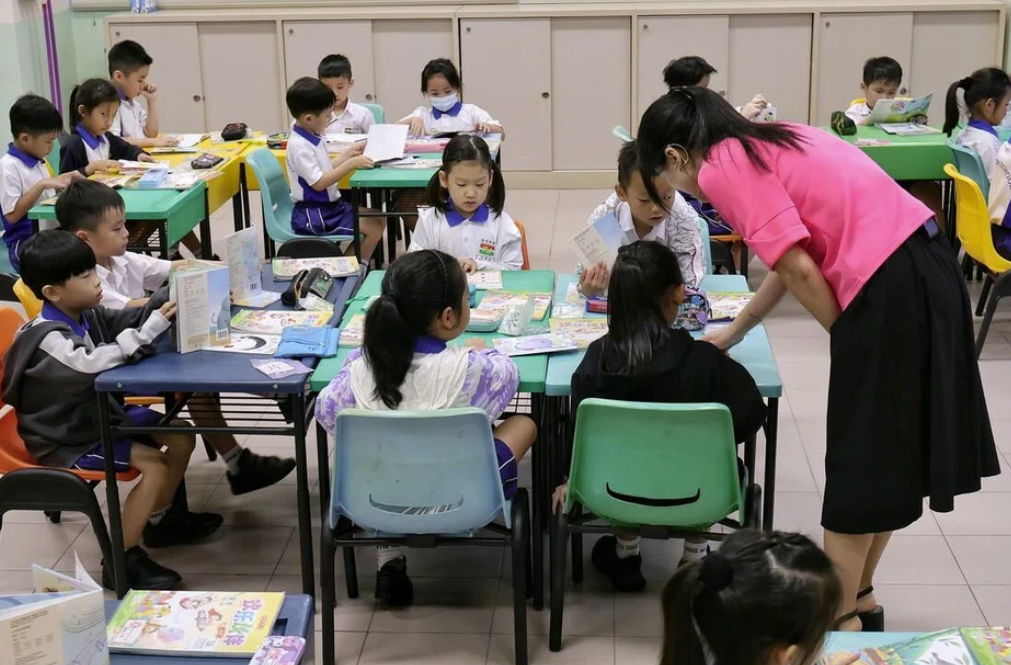
For example, at lower primary levels, students learn best by using multiple senses to engage with real-world objects. Technology is therefore used lightly in the classroom, to prioritise hands-on inquiry, real-life explorations, and outdoor experience. AI is progressively introduced from Primary 4 with teachers' supervision.
At the secondary level, students are equipped with personal learning devices and progressively use AI independently for learning. This is done through well-designed learning tasks, which allows students to benefit from the personalisation of learning offered by AI while guarding against cognitive outsourcing.
Teachers are provided with MOE-developed AI tools, which are designed to be pedagogically sound and are accompanied by appropriate guardrails. These tools are in the Singapore Student Learning Space so that all students can access them to help empower their learning.
Given that students' access to AI is not just confined to school, MOE has taken steps to develop students' AI literacy, as well as guide students on ethical and responsible use of AI so that they will use AI to benefit their learning.
Teachers are trained to design and conduct lessons to help students acquire fundamental knowledge and develop higher order thinking skills. MOE provides in-service professional learning to equip teachers to use AI thoughtfully, grounded in pedagogical principles that enhance student engagement and learning.
MOE continues to assess students' mastery of foundational concepts to ensure they can apply them without using AI. For example, proctored examinations that disallow AI use help ensure that students have strong fundamentals. Teachers' interactions with students also give them good knowledge of each student's learning progress to provide support when learning gaps are observed.
Link to Hansard: Link
Image Credit: ST Files