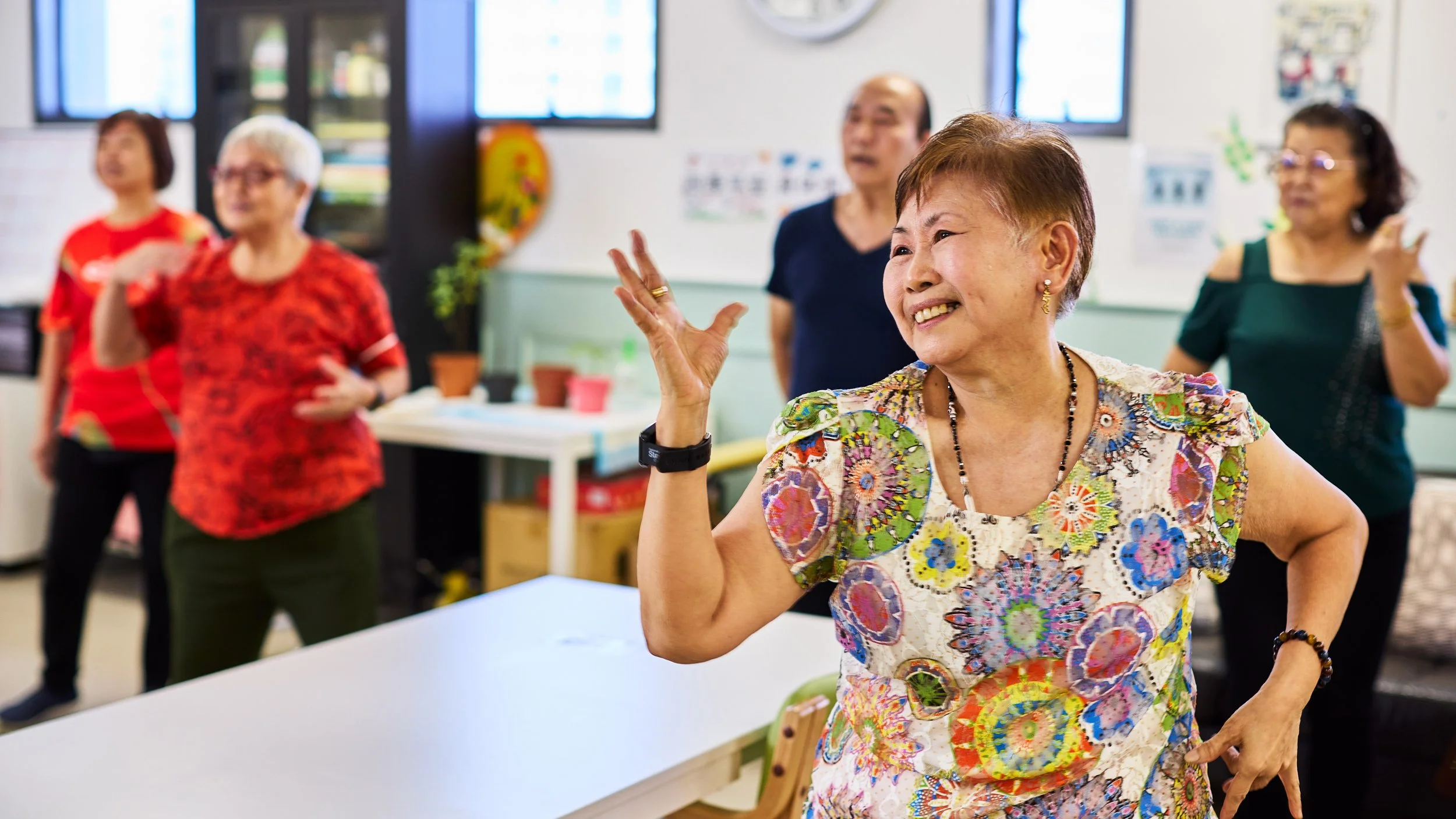
Age Well Singapore
(Ministry of Health)
-
Mr Cai Yinzhou asked the Coordinating Minister for Social Policies and Minister for Health regarding Age Well SG (a) what measures are used to track improvements in quality of life and healthspan; (b) how social isolation is measured; and (c) what objective targets or benchmarks are used to assess progress in reducing social isolation and enhancing overall well-being among seniors.
Mr Ong Ye Kung: It is not straightforward to track the impact of national preventive health programmes like Age Well SG. Operationally, we can monitor attendance and outreach numbers. Long term, the Ministry of Health monitors indicators such as frailty prevalence, chronic disease prevalence and health-adjusted life expectancy. In time, we also expect academics to conduct research on the impact of these project
Link to Hansard: Link
-
Mr Cai Yinzhou asked the Coordinating Minister for Social Policies and Minister for Health (a) whether the Ministry plans to onboard Traditional Chinese Medicine (TCM) practitioners to the National Electronic Health Record (NEHR); (b) if so, what is the timeline; (c) what technical and financial support will be provided to TCM clinics to upgrade their practice management systems; and (d) how will the Ministry ensure data interoperability between TCM diagnostic terminology and Western medical records within NEHR.
Mr Ong Ye Kung: Traditional Chinese Medicine (TCM) service is not a licensable healthcare service under the Healthcare Services Act 2020, and under the Health Information Bill, data from TCM practitioners are not within the data types to be contributed to the National Electronic Health Record system (NEHR).
-
Mr Cai Yinzhou: My second cut addresses the age-old question: what is a life well lived? For many seniors I have spoke with in Bishan-Toa Payoh, the answer is not just more handouts, but dignity, choice and the agency to live their golden years on their own terms.
To this end, I have four proposals.
First, expanding the Integrated Community Care Providers into a "Senior Concierge". Minister Ong has spoken about a single coordination point for care and 85 sub-regions, which will soon provide coordination across Regional Health System, Home Personal Care Plus, Singapore Counselling Centre, Drug Rehabilitation Centre and Active Ageing Centres with One Ring to Rule… excuse me, One Care Plan to coordinate them all.
I propose beyond clinical outcomes, to further centralise touchpoints for participating in Employment and Employability Institute for job search, People's Association for community events and Social Service Offices for financial aid applications. One contact, one coordinator, for the whole senior as a person and being.
Second, to measure what truly matters. In our October Sitting, the Ministry's reply on tracking social isolation focused on attendance and outreach numbers. Loneliness cuts deeper and these numbers only scratch the surface. I ask the Ministry to partner with our educational institutes to conduct regular, widespread surveys on the social determinants of health. We need a localised version of "Quality of Life" indicators to understand how our efforts are truly reducing isolation.
Third, bringing specialist healthcare to the heartlands. Not being able to eat, hear or walk, is directly linked to cognitive decline and increased mortality. Yet, access to specialised help remains a hurdle. I ask the Ministry to ramp up dental, audiology and podiatry facilities, specifically to estates with high concentrations of seniors. We must catch these impairments before the rapid decline in quality of life.
Fourth, I ask the Ministry to consider introducing degree or diploma courses for audiology and podiatry in tertiary institutions, to increase the number of Singaporeans specialising in these areas and in turn, be better able to serve our seniors who require such specialised care.
By streamlining access, measuring what matters, expanding specialist care and building local expertise, we ensure our seniors are not just "ageing", but are living with agency.
Dr Koh Poh Koon: In response to Mr Cai Yinzhou's query on the provision of specialist dental, audiology and podiatry services in the heartlands, we recently enhanced Community Health Assist Scheme (CHAS) subsidies for dental care and are expanding dental services at polyclinics and strengthening partnerships with community dental providers – moves that will bring affordable dental care closer to where our seniors live.
Most geriatric dental needs can be managed by polyclinics and CHAS dental clinics. Specialist care is available for more complex conditions at our hospital dental clinics as well as two national specialty dental centres – the National Dental Centre Singapore and the National University Centre for Oral Health.
Additionally, while podiatry services are available at selected polyclinics, foot screening services for patients with diabetes are available at all polyclinics as well as Healthier SG GPs through their respective Primary Care Networks.
Mr Cai Yinzhou would be pleased to know that the graduate-entry Master of Science (Audiology) programme at NUS runs biennially and has an average of 13 graduates per cohort. For podiatrists, demand is being met through scholarships for local talents to pursue podiatry studies overseas and recruitment of overseas-trained podiatrists.
Mr Tan Kiat How: Next, I assure Mr Cai Yinzhou and Mr Yip Hong Weng that we do track outcomes of our programmes, such as frailty prevalence, social participation and caregiver well-being. We do so with different parties, including research institutions.
Let me now turn to care delivery transformation. By 2030, around 100,000 seniors will need help with at least one daily activity like eating or showering. They will likely need services from different service providers. We want their experience to be as seamless as possible and not have to run from pillar to post to receive these services. Technology will be a key enabler for tighter care coordination.
I agree with Mr Cai's point that we want to make it easier for seniors to access social and health services.
First, we have introduced Integrated Community Care Providers in 84 sub-regions around Singapore. This means a single party to coordinate care for seniors within each area. Currently, seniors undergo multiple care assessments done by different service providers they go to. Not only does this duplicate effort for providers and create greater inconvenience for our seniors, our seniors may also end up with uncoordinated care due to different care plans.
We will streamline this entire process. From next month, seniors requiring multiple long-term care services will need only one comprehensive assessment done by the Integrated Community Care Providers using a standardised, internationally-recognised tool. Each senior will have a single community care plan developed based on this assessment. Every provider that the senior goes to will take reference from this care plan.
Such an approach will ensure seniors benefit from a seamless experience and better coordinated care. We will progressively roll this out from October this year. We are enabling this new way of coordinating and delivering services through a common IT platform for community care providers.
Mr Cai Yinzhou: Chairman. I have four supplementary questions. The first is for Senior Minister of State Koh. It was mentioned that there was a Masters in audiology. But my question is whether we have plans for a diploma or undergraduate in audiology, as well as podiatry, which I understand we do not have any localised courses as stated on the NUHS website.
My second clarification is for Senior Minister of State Tan on flexible work arrangements for supporting caregivers. I understand that flexible work arrangements are differing context to context and workplace to workplace. How can MOH help to formalise the caregiver status and legitimise their need for flexibility in a way that they can better demonstrate to their employer the need for that flexibility?
The third question is on the Integrated Community Care Provider arrangements. I thank Senior Minister of State Tan for sharing about the One Care Assessment Plan and one assessment, which is clinical. Would there be enhancements in the pipeline beyond clinical outcomes to also having access one financial assessments, as well as a one employment coordinator for seniors who might be looking for part time employment?
Dr Koh Poh Koon: Sir, I thank the Member for his question on audiologists. In general, a qualified audiologist in Singapore needs a higher level of certification because a diploma level may not be quite enough to perform the task. So, we will look and see whether there is a way to actually find an in-between. But ultimately, we cannot sacrifice standards just to meet the needs of people who want to take a shorter course to get there. The first thing is to maintain standards.
But there are actually some of these audiology programmes that are done at a lower level. For example, I do believe that there are some basic industrial audiometry course at Temasek Polytechnic, but that is really more for industrial application of technicians who are actually screening at the industry level, not so much as a clinical setting where you actually provide services at the hospital.
Mr Tan Kiat How: Sir, I will try to answer the questions from Mr Cai. To Mr Cai, please correct me if I heard your questions wrongly, because I was trying to get all your four questions. One of the questions was, whether social prescriptions are part of the One Care Assessment Plan. That is actually part of the Healthier SG, where the care plan also includes the social prescription. For example, diet, lifestyle, exercise and many more other areas. So, certainly, that should be part of that care plan, but this goes beyond what the Integrated Community Care Provider does, which focuses more on seniors and the needs of those seniors.
Mr Cai also asked if the the Integrated Community Care Provider and Agency for Integrated Care could cater for different sorts of activities, like faith-based volunteering or maybe for seniors who are interested in gardening as a social activity.
I would say that we are just starting to roll out the the Integrated Community Care Provider framework starting this year and over the coming years, and this is a non-trivial exercise across 84 sub-regions in Singapore – bringing together different parties and partners. In each area, each sub-region, there are different providers, different parties providing different services – from befriending services, rehabilitation services and many more.
So, bringing the different partners together, having a common language in which to discuss, understand and reach out and provide services to a senior is non-trivial. Having a standardised tool based on this assessment, developing a care plan, implementing this care plan and getting our seniors to go through the care plan entirely is non-trivial. So, I would say, let us take one step at a time and there are already many activities and other partners in the community providing different services and volunteering opportunities for seniors. We welcome it. It is really part of the fabric of a diverse community and very much part of the "we first" society.
Mr Tan Kiat How: Sir, let me take the opportunity to also answer Mr Cai's question that I missed out earlier about flexible work arrangements and how can we work with different partners on that. I mentioned in my speech the different Ministries' efforts to support caregivers, and we understand the challenges that caregivers face, juggling between work and care. This is something they are working on, including flexible work arrangements and other initiatives. We will continue to work with our colleagues and other partners in the community.
Link to Hansard: Link (Question) and Link (Supplementary Question and Response for both questions)
-
Dr Choo Pei Ling asked the Coordinating Minister for Social Policies and Minister for Health in light of global competition and rising domestic demand for healthcare manpower (a) how Singapore is strengthening long-term workforce sustainability while maintaining care standards; and (b) whether workforce planning assumptions are being reviewed to ensure resilience amid tightening regional labour markets.
The Senior Minister of State for Health (Dr Koh Poh Koon) (for the Coordinating Minister for Social Policies and Minister for Health): Sir, ensuring an adequate healthcare workforce to meet rising healthcare demand is a foremost priority for the Ministry. We adopt a multi-pronged workforce strategy to ensure sufficient healthcare manpower while maintaining care standards and regularly update our plans as circumstances change.
Our focus continues to be to build up the local core of our healthcare workforce through diversifying training pathways, increasing local intakes for healthcare programmes and ensuring that job roles are attractive and salaries are competitive. We bring in qualified foreign healthcare workers in areas of shortfall. And to ensure resilience, we diversify the sources of foreign recruitment and secure government-to-government bilateral manpower cooperation agreements with regional countries.
We will continue to invest in good preventive health and right-site patients to appropriate care settings to keep our healthcare system sustainable.
Mr Cai Yinzhou (Bishan-Toa Payoh): Thank you, Speaker. Thank you, Senior Minister of State for the reply. I have a question regarding foreign domestic workers in Singapore. I understand we have 300,000 foreign domestic workers who form about one-fifth of our foreign workforce. Many of them work in the homes in the care settings at home, taking care of seniors with a range of conditions as well, some more severe than others.
May I ask the Senior Minister of State if we are considering having a professionalised track for foreign domestic workers to specialise in the aspect of palliative or geriatric care, considering that is part of what they are already doing at home, in order to professionalise our home care setting?
My second question is also for foreign domestic workers who are really good in taking care of seniors. Sometimes, after the seniors pass on, they are unable to continue taking care of another senior in another home setting. Do we have options for these foreign domestic workers to progress to also join the community care sector as a care staff, or even nurses as well?
Dr Koh Poh Koon: Sir, the short answer to that is that we have no plans to turn foreign domestic workers into healthcare professionals in the formal sense.
Link to Hansard: Link
-
Mr Cai Yinzhou asked the Coordinating Minister for Social Policies and Minister for Health (a) what proportion of local institutes of higher learning (IHL) nursing graduates enter and remain in the nursing profession after five years, and how this is tracked; and (b) how will nursing school intake trajectories be adjusted to sufficiently meet the 82,000 healthcare workforce target by 2030.
Mr Ong Ye Kung: About eight in 10 nursing graduates from local institutes of higher learning (IHLs) enter the nursing profession each year. Of these, about seven in 10 remain in the profession after five years.
While the intakes of nursing students at local IHLs have increased from 2,100 in 2022 to nearly 2,300 in 2025, there is a limit to how much we can increase the intake. Young Singaporeans have diverse interests, and healthcare is already taking a good share of every cohort every year. To meet our long-term healthcare manpower needs, we will also need to find ways to further improve retention of existing nurses, recruit mid-career entrants through skills conversion and augment with foreign nurses.
Through these measures, we remain on track to meet our long-term manpower needs, with local nurses remaining the core and majority of the nursing workforce.
Link to Hansard: Link
-
Mr Cai Yinzhou asked the Coordinating Minister for Social Policies and Minister for Health (a) how many seniors living alone have been assessed with severe lower limb mobility loss or bilateral amputation; (b) whether existing home modification subsidies and options are found to adequately address the more extensive adaptation needs; and (c) whether a dedicated home modification pathway or enhanced subsidy tier will be recommended for seniors with lower limb loss to age in place.
Mr Ong Ye Kung: There are several schemes to help seniors age in place. This includes the enhanced Home Personal Care scheme, which provides subsidised personal care at home. The Enhancement for Active Seniors programme (EASE) provides up to 95% subsidies on home modifications, such as grab bars and ramps. The Seniors' Mobility and Enabling Fund (SMF) provides up to 90% subsidies for assistive devices like wheelchairs. The Home Caregiving Grant provides up to $600 per month to defray costs of care for seniors with moderate disability living in the community. These schemes were recently enhanced to ensure they continue to meet our seniors' needs.
Eligibility for such support is based on the applicants' needs. A key consideration is their ability to perform Activities of Daily Living and not types of disability, so that we have an objective assessment across conditions. The Ministry of Health does not track the number of seniors living alone with severe lower limb mobility loss or bilateral amputation.
As part of existing clinical and care pathways, therapists at public healthcare institutions or community service providers assess seniors' functional needs and recommend appropriate assistive devices, home modifications or both. Seniors may apply for EASE and SMF through their public healthcare institutions, community service providers or directly through the Housing and Development Board and the Agency for Integrated Care.
Link to Hansard: Link
-
Mr Cai Yinzhou asked the Coordinating Minister for Social Policies and Minister for Health (a) what proportion of the total subsidised community dialysis capacity is currently served by the National Kidney Foundation; (b) whether that concentration presents a systemic risk to patient access; (c) what is the Ministry’s strategy to diversify the non-profit dialysis provider base; and (d) what support or incentives are available to reduce barriers to entry for existing healthcare non-profits to provide dialysis services.
Mr Ong Ye Kung: Providing kidney dialysis services involves challenging and hard work. We are fortunate to have good providers in the National Kidney Foundation as well as in other social service providers, such as Kidney Dialysis Foundation, with a 90:10 split in patient load share. They are non-profit, relying on donations to sustain their operations. The Ministry of Health welcomes additional social service providers to take on the challenge and will certainly partner them to diversify and strengthen the overall ecosystem.
Link to Hansard: Link
Image Credit: Age Well Singapore (Ministry of Health Singapore)