Active Mobility Fire Device Safety
(Ministry of Home Affairs)
-
Mr Cai Yinzhou asked the Coordinating Minister for National Security and Minister for Home Affairs for each year for the last five years, how many fires relating to personal mobility devices, power-assisted bicycles and personal mobility aids took place in (i) owner-occupied HDB flats; (ii) public rental HDB flats; (iii) condominiums; (iv) landed houses; (v) non-residential premises such as commercial buildings; and (vi) non-buildings such as on the roads or open spaces.
Mr K Shanmugam: The requested data is provided in the following table:
Link to Hansard: Link
-
Mr Cai Yinzhou asked the Coordinating Minister for National Security and Minister for Home Affairs for each year in the last five years (a) how many fire incidents are related to (i) personal mobility devices (PMD) (ii) power-assisted bicycles (PAB) and (iii) personal mobility aids (PMA); and (b) how many of these incidents involved non-UL-2272 or non-EN-15194 certified, modified, or illegally imported devices.
Mr Cai Yinzhou asked the Coordinating Minister for National Security and Minister for Home Affairs (a) what is the number of existing public rental HDB flats that have installed Home Fire Alarm Devices (HFADs) under the Assistance Scheme; and (b) whether the Ministry will consider extending the HFAD Assistance Scheme to provide free installation of HFADs for (i) needy occupants of purchase HDB flats and (ii) seniors living in HDB Community Care Apartments.
Mr K Shanmugam: The number of fires in Housing and Development Board (HDB) estates has generally been on a decline in the last five years, from 939 in 2020 to 803 in 2024. That said, every fire is one too many. It causes major disruptions to those affected, and loss of assets and even lives. Even more unfortunate is the fact that most of the fires could have been prevented.
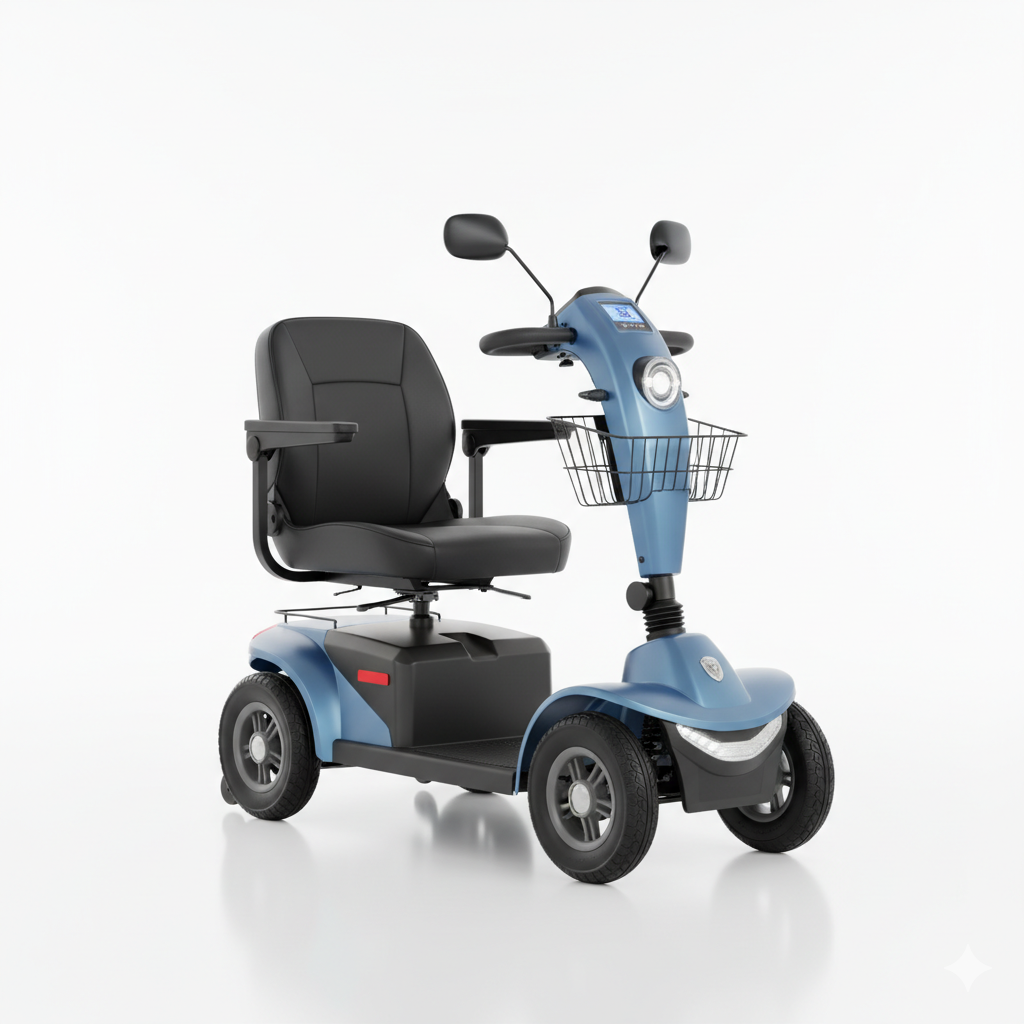
One significant area of concern is the fire risk posed by Active Mobility Devices (AMDs). Over the last five years, 187 fires, or about 4% of fires in HDB estates, involved Active Mobility Devices (AMDs). Of these, about 46% involved Personal Mobility Devices (PMDs), 42% involved Power-Assisted Bicycles (PABs) and 12% involved Personal Mobility Aids (PMAs). About 98, or about half, of these AMD-related fires occurred during the charging of the devices.
Although such fires form a small proportion of fires in HDB estates, AMD-related fires are typically more severe and more likely to result in fatalities and injuries.
We are especially concerned about non-compliant AMDs. Just looking at the past three years, 77, or 72%, of the AMD-related fires in HDB estates involved PMDs and PABs which were either non-UL2272 compliant or non-EN15194 compliant, or had been modified, rendering them non-compliant.
That is why the Land Transport Authority (LTA) has stepped up regulatory measures and enforcement against the sale or use of non-compliant AMDs. Since June 2021, businesses and individuals must obtain LTA's approval to import PABs and PMDs into Singapore. The devices must meet the prescribed technical and safety requirements, before they can be used on our public paths and roads.
LTA also conducts regular enforcement operations against non-compliant AMDs on public paths, as well as retailers selling non-compliant AMDs. Between 2020 and 2024, LTA detected more than 6,000 cases of non-compliant AMDs on public paths and roads, and more than 100 violations by errant retailers.
LTA, together with the relevant agencies, will continue to review existing guidelines on the safe storage and charging of AMDs. Currently, AMDs do not require special charging infrastructure and can be charged using standard wall sockets found in homes.
We are considering tougher enforcement action to send a stronger deterrent signal that the use or sale of non-compliant AMDs poses significant safety risks. These individuals are knowingly endangering not just the lives of their family, but the lives of their neighbours as well.
We have also been doing more to help homeowners better respond to fires. One way is to provide early warning whenever a fire breaks out. In 2018, we made it mandatory for all new residential premises to have Home Fire Alarm Devices (HFADs). This applies also to Community Care Apartments, which were all built after the regulation came into effect.
For existing residential premises, we took a risk-calibrated approach and only mandated it for homes which are carrying out fire safety related addition and alteration works. This was to strike a balance in ensuring the adoption of fire safety equipment, but in a practical manner. Nonetheless, we strongly encourage all homeowners to install HFADs and have put in place several schemes to support certain groups in doing so. For HDB public rental flats, more than 80% of them already have HFADs installed and HDB will progressively install HFADs in the remaining 20%. The installation of HFADs is done at no charge to the tenants.
In 2024, the Ministry of National Development (MND) expanded the Enhancement for Active Seniors programme to include the installation of HFADs. Seniors can enjoy a subsidy of up to 95% to install HFADs in their homes.
HFADs are also installed as part of fire safety works, under the Home Improvement Programme, in cases where fire-rated doors are installed. As of June 2025, HFADs have been installed in about 191,000 HDB flats, or 17%, of all HDB flats. Of these, 74,000 flats, or 39%, were built prior to 2018.
We will continue to review the fire safety of our HDB flats. However, we do not see a need for HFADs at HDB corridors, or for centralised building fire management systems, at this juncture.
We have also implemented measures to better equip homeowners to respond to fires, by making fire extinguishers more widely and easily accessible. Since October 2023, the Singapore Civil Defence Force (SCDF) has progressively installed fire extinguishers at Lifesavers' Emergency Points, under a joint initiative with Temasek Foundation, HDB and Town Councils. The fire extinguishers are co-located with existing automated external defibrillators (AEDs) at the lift lobbies of one in every two residential HDB blocks. To date, more than 90% of all targeted HDB blocks have been equipped and we aim to complete the roll-out by 2028. At this juncture, we are focused on completing the roll-out to the remaining blocks. We will assess whether there is a need to do more thereafter.
While the Government will continue to review our policies, programmes and regulations, the best defence against a home fire is the homeowner ourselves. SCDF continues to work with Government agencies, including LTA, HDB and the People's Association (PA), as well as other stakeholders, such as the Town Councils, and community partners, to strengthen public education and outreach on fire safety and emergency preparedness.
Through the SCDF's Responders Plus Programme, residents are offered free hands-on training on the use of fire extinguishers, CPR and AEDs. In addition, the SCDF and the PA's Community Emergency and Engagement Committees will continue to conduct block evacuation exercises on a regular basis.
With support from SCDF and PA, the National Fire Safety and Emergency Preparedness Council (NFEC) will launch a residential fire safety campaign, "Better Awareness, Safer Homes" to increase public awareness on the top causes of residential fires and encourage homeowners to evaluate potential home fire hazards. The Active Mobility Fire Safety Taskforce, co-chaired by LTA and SCDF, will also step-up public education under the "Be Device-Safe" programme, on the dangers of using non-compliant devices and the importance of safe charging.
Fire safety is a collective responsibility. We must work together, each doing our part, to keep our homes fire-safe.
Link to Hansard: Link
-
Mr Cai Yinzhou asked the Coordinating Minister for National Security and Minister for Home Affairs in light of recurring HDB fires and public concern, whether the Government will establish a dedicated Task Force on Electrical Consumer Goods Fire Safety across agencies and stakeholders.
Mr K Shanmugam: The number of fires in the Housing and Development Board (HDB) estates has generally been on a decline in the last five years, from 939 in 2020 to 803 in 2024. The Singapore Civil Defence Force already collaborates closely and systematically with many agencies, such as Land Transport Authority, HDB, People's Association, and stakeholders, such as the Town Councils. We will continue to leverage these strong partnerships to further minimise fire risk in our homes.
Link to Hansard: Link
-
Mr Cai Yinzhou asked the Coordinating Minister for National Security and Minister for Home Affairs whether the Ministry will consider collecting and tracking the occupation of road users and the identity of their employers in traffic accidents that occur during the course of work to enable targeted interventions for commercial or high-risk road users.
Mr K Shanmugam: The Traffic Police (TP) does not track the occupational or employer data of those involved in accidents as these are not material to investigations. The Ministry of Manpower (MOM) tracks injuries to employees and platform workers caused by work-related traffic accidents, which are reported by employers and platform operators. TP also notifies MOM of certain work-related traffic accidents, such as those involving fatalities.
The weight of vehicles is highly correlated to the degree of injury and the fatality risk in the event of an accident. TP's interventions and public communications are, therefore, targeted at the owners and users of vehicles of different weight classes.
Link to Hansard: Link

Image Credit: Gemini 2.5 Flash