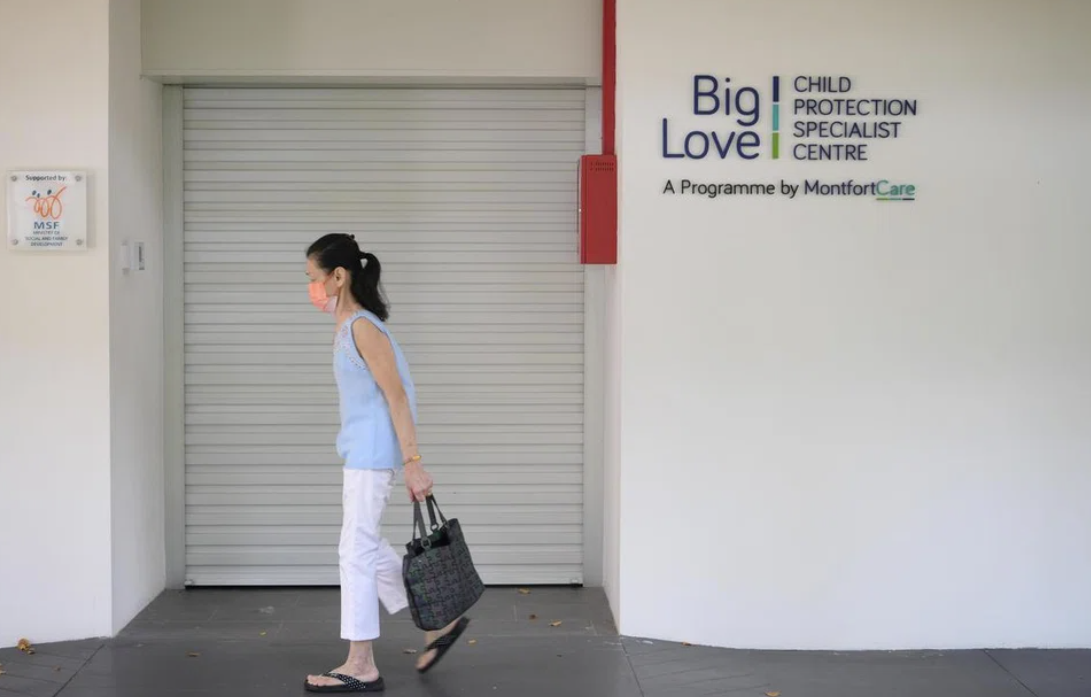
Safeguarding our Children and Vulnerable Persons
(Ministry of Social and Family Development)
-
Mr Cai Yinzhou asked the Minister for Social and Family Development (a) whether the review of the February 2020 fatal child abuse case had established if the child had verbally disclosed or attempted to communicate the abuse during her interactions with relevant agencies; and (b) what specific lessons were learned regarding training of social workers and preschool educators to detect and respond effectively to verbal or non-verbal cues from young children.
Mr Desmond Lee: Thank you, Mr Speaker. Sir, this House would be familiar with the tragic case of Megan Khung. She died in February 2020, after months of abuse by her mother and her mother’s boyfriend. All the agencies concerned – the Ministry of Social and Family Development (MSF) Child Protective Service, the Early Childhood Development Agency (ECDA), the Singapore Police Force (SPF), Beyond Social Services and HEART@Fei Yue Child Protection Specialist Centre – accept the Panel’s findings in full.
There were opportunities to pick up on the abuse, which might have prevented Megan’s death. Our responses clearly fell short.
As Minister Masagos and I had said on 23 October, MSF is the lead for the national child protection ecosystem. On behalf of all the agencies and organisations concerned, we are deeply sorry for the outcome and for the lapses at the Child Protective Service and SPF, as well as the missed opportunities at ECDA. We should have done much better.
Mr Speaker, our social workers confront the pain of child abuse cases every day. Their emotional burden of separating parents and children, and managing cases resulting in tragic outcomes is a heavy one, which they have chosen to bear. To our social workers, thank you for your commitment to protecting vulnerable children. Let us carry this burden together, as a sector and as a society.
Before I answer Members’ questions, I would like to set out how the child protection system works, and I might add, it is quite similar for vulnerable adults as well.
For child protection, it rests on the foundational principle that parents are primarily responsible for their children. And in most families, parents do their best for their children. We do not and should not intervene unnecessarily. Families encountering the child protection system often find the experience stressful. They may be questioned by teachers, healthcare professionals, social workers and the Police, which can feel intrusive and accusatory, especially if eventually no abuse is found.
Social workers aim for a collaborative relationship with the families they work with. They support parents to care for their children, intervening only when the child is at risk. When there are reasonable grounds to believe that a child is in need of care and protection, the law empowers child protection officers to step in, to implement safety plans or even remove the child from the home and from the family.
Protecting children requires society’s collective effort. We depend on neighbours, friends and relatives to offer help to parents facing caregiver stress, and to report suspected abuse by calling the National Anti-Violence and Sexual Harassment Helpline (NAVH). Alongside them, preschools, schools, hospitals, healthcare institutions and social service agencies also play critical roles in identifying abuse.
Over the years, MSF and our partners have worked to strengthen the child protection ecosystem. Megan’s death five years ago had already prompted further enhancements to protocols. The system has evolved since then. But there is still much more that can be done.
My response to Members’ questions will be in three parts: first, enhancing frontline capability; second, strengthening systems and oversight; and third, responding to the Review Panel’s recommendations.
Mr Speaker, let me start with frontline capability. We will enhance frontline capability and empower professionals who are our first line of defence. In particular, we will continue to manage practitioner workload and ensure social workers are adequately resourced. The risk of burnout is real, and it is difficult to attract and retain people in child protection work.
Over the past three years, the average caseload ratio for the sector has been fairly stable at around 18 to 21 cases per worker, but the variation across centres is significant, ranging from 12 to 30 cases per worker. For the Child Protective Service, now known as PSV or Protective Service, we have doubled our child protection officers from around 45 in 2019 to more than 90 in 2040, and we are continuing to expand. [Please refer to clarification made under "Measures for Prompt Police Case Resolution and Mandating Assignment of Police Officers with Child Protection Training in Child-related Cases", Official Report, 5 November 2025, Vol 96, Issue 10, Oral Answers to Questions section.]
The additional resources have helped bring down the average caseload per officer, down from around 40 to 35 today. We have also redesigned the job to reduce the workload on our protection officers. Support staff were brought in, and services were outsourced to handle ancillary tasks and augment resourcing for critical work. This enables our protection officers to focus on social investigations as well as supervision. We will continue to step up training and competency development to give our practitioners the skill and the confidence to detect child abuse and make sound decisions that keep children safe.
Some Members raised concerns about early and accurate identification of child abuse and the liability issues that may arise when making a report. There are already laws mandating reporting of child abuse. For example, ECDA's regulations require preschools to report suspected child abuse and failure to do so is an offence. Section 424 of the Criminal Procedure Code also mandates the reporting of certain serious offences, such as grievous hurt and sexual offences, and this includes offences against children. If professionals and members of the public report child abuse in good faith, the Children and Young Persons Act (CYPA) protects them from civil or criminal liability.
That said, professionals may find themselves in a difficult position to report abuse, not only for legal reasons but for fear of having the families cut them off, resulting in them not having sight of the vulnerable person. They may also be concerned about undermining the trust that they have painstakingly built-up with the families that has enabled them to keep the child safe.
MSF will, therefore, look into how we can better foster a safe environment for professionals to report suspected child abuse cases. To better identify child abuse, we are also studying analytic tools to help us connect the dots and see trends across agencies. This allows us to target our efforts on higher-risk cases. But having said that, we have to carefully validate these tools to avoid excessive false positives, which could overwhelm the system, and to avoid reinforcing stereotypes.
Some Members asked us about intervention thresholds and highlighted the need for balanced decision making.
Determining when and how to intervene requires difficult judgement calls, balancing child safety with preservation of the family. Members' questions reflect a range of views. Some Members advocate for earlier intervention or child removal; while others caution against overreach, which may cause distress to otherwise reasonably well-functioning families.
The approach to child protection occurs on a continuum. When concerns arise, the community can offer informal support: the neighbour can check in; family members can ask if help is needed, lend a listening ear, and so on. But as concerns escalate, the child protection system progressively steps in. From social workers educating parents on child management strategies and caregiver stress responses, to state intervention in serious cases of child abuse.
Generally, the existing thresholds are appropriate. However, we will make clear that while we respect the role of parents in disciplining their children, excessive physical discipline will be considered and reported as abuse.
I would also like to address a concern about reporting thresholds. Members can be assured that the role of those making a report is simply to flag concerns. It is the job of our social workers to support parents who may be struggling with caregiving; and the job of the Police and Child Protection Specialist to ascertain if abuse has occurred.
The second set of issues raised by Members touch on how we will strengthen our systems and our oversight. One area is to regularly audit agencies managing child abuse cases, including the Protective Service, so as to ensure accountability and transparency and to foster continuous improvement. The Protective Service has been working with child protection case management agencies to surface cases where they assess that the risk level exceeds what the agencies were designed to handle.
We have also started to contact other social service agencies and organisations that are not child protection case management agencies to surface all suspected child abuse cases. This will be done progressively and expeditiously.
Today, the Protective Service conducts periodic practice reviews with external consultants to assess whether officers have made accurate case assessments and complied with protocols. We intend to further strengthen our quality assurance framework by increasing the frequency of practice reviews and expanding the audit scope. MSF will implement the enhanced measures by 2026.
Several Members suggested having more centralised coordination and data integration. Indeed, MSF will be setting up a new social service coordination centre supported by technology. It will help us better detect, sense make and connect the dots for cases from different touch points, such as the social services, education, preschool, community and other sectors.
We are also working to improve protocols and coordination with the Police for missing children, something mentioned by Mr Victor Lye. Today, child protection case management agencies have to lodge a police report within 24 hours and concurrently alert Protective Service. The Protective Service also reports cases to the Police within 24 hours. When a case of suspected child abuse is reported to the Police, the Police will assess the case based on the facts and circumstances.
For cases assessed as higher risk, for example, involving serious physical harm or sexual abuse, the Police will immediately intervene to ensure the child's safety. The Protective Service will keep a close watch on missing children reports made to the Police by case agencies and work closely with the Police. When the Police come across a case of suspected child abuse, besides conducting Police investigations, they will also inform MSF for safety planning and social intervention. The new social service coordination centre, which I mentioned earlier, will also provide tighter links to Police operations.
Finally, let me address questions from Members on the Government's response to the Panel's recommendations.
MSF fully accepts the Panel's recommendations. They focus on three broad areas: first, improving the clarity of roles within the child protection ecosystem; second, fostering a stronger learning culture; and third, providing more structured support for social service practitioners.
We will consult and work closely with the social sector to implement the recommendations progressively and complete the implementation by end 2026.
Sir, some of our responses to the Panel's recommendations have already been set out earlier in my reply. For example, the establishment of the social service coordination centre; the use of analytic tools and technology to track cases and connect the dots; and working with agencies which are not child protection case management agencies to surface cases to child protection management agencies, so that we can handle them.
I will briefly set out our responses to the other recommendations for completeness and since Members have asked.
In Recommendation 2, the Panel proposed establishing an appeals mechanism to address cases where agencies have differing views on risk levels and case management. This has to be done quite quickly. So, MSF will set up a Triage Assessment Panel by the first quarter of 2026 to do this and to determine which agency is best placed to manage the case, and then move.
In Recommendation 3, the Panel proposed that MSF should review ECDA's role in triaging potential intra-familial child protection cases. We agree. By early next year, preschools will report such cases directly to the NAVH.
In Recommendation 4, the Panel recommended that we correct the wrong perception that only family members can make a Police report of a missing child and to create a safe culture of reporting. Since 2020, MSF has put in place formal protocols for cases where a child is unsighted or missing. There is now a common understanding within the sector that anyone can make a Police report of a missing child. But we will continue raising public awareness and understanding of this issue, such as through the Break the Silence campaign.
In Recommendation 5, the Panel proposed that lessons learnt from critical incidents should be routinely shared with community agencies. In the past, MSF would carry out bilateral reviews of incidents with the relevant social service agencies. In future, all deaths of children known to social services will be independently reviewed with lessons shared across the sector. We will consult with the sector on how best to do this.
On the final recommendation about providing more structured support for social service practitioners, I would like to assure Members that MSF is taking steps to bolster the morale of our protection officers and the social services sector. As recommended by the Panel, employers can do more to create a safe and supportive work environment for protection practitioners. To enable this, MSF will set up a Protection Practitioners Care Fund to implement capability building and well-being initiatives for protection practitioners. Further details will be announced next year.
Sir, let me conclude. MSF will continue to engage and work closely with stakeholders to strengthen our internal systems and communication across agencies. We must carefully calibrate our efforts even as we do more. Protocols and structured tools are important, but they should guide and not replace critical thinking, judgement and relationship building. We must never reduce child protection work or vulnerable protection work to a mere check box system. Instead, we need to build trust and relationships over and on top existing systems and procedures – between parents, the community, social services and the Government.
As individuals and as a society, let us look out for those who may be struggling: parents and caregivers who need support in parenting and child caregiving, turn to our community and social service agencies for help and guidance.
Each time a tragedy like Megan's occurs, we feel anger, sorrow and regret. Whether we are members of society or social work professionals, we must work together and do our utmost to protect our children. Let us rededicate ourselves to protecting every child and vulnerable person, never forgetting those whom we have lost.
Link to Hansard: Link
-
Mr Jackson Lam asked the Coordinating Minister for National Security and Minister for Home Affairs (a) whether police risk-assessment tools will be recalibrated to prioritise cases involving children who are missing from contact for extended periods; (b) whether an automatic supervisory review will be triggered after defined time lapses for such cases; and (c) how technology, such as inter-agency databases or alerts, will support faster child location efforts by the police.
Mr Gabriel Lam asked the Coordinating Minister for National Security and Minister for Home Affairs on the February 2020 fatal child abuse case (a) why did the Investigation Officer classify the missing child report as low-risk; (b) what steps will the Ministry take to review the risk classification guidelines and follow-up requirements for Investigation Officers’ use especially for cases of missing vulnerable persons; and (c) how will supervision of Investigation Officers be strengthened.
Mr Goh Pei Ming: My reply will also cover questions for written answer filed by Ms Valerie Lee and Ms Diana Pang for today's Sitting.
Megan Khung's case was a tragedy. Minister Desmond has earlier set out the Government’s views on it.
In 2020, after Megan's death was uncovered, the Police reviewed their handling of the case. There were two rounds of police reports filed. The first report was made in January 2020 by Megan’s grandmother. Further police reports were made in July 2020, by Megan's grandmother and father.
The Investigation Officer (IO) who dealt with the first Police report, and her supervisor, failed to follow Police's procedures to escalate the case to the regular case review sessions for monitoring and guidance. The IO had assessed this as a case of child discipline with low safety concerns based on the information that she was presented with at that time.
Following the report, the IO attempted to contact Megan's mother over the next two weeks, but could not reach her. She did not follow up beyond that because she was then deployed for COVID-19 related duties. Despite this, the case would normally have been followed up if the IO and her supervisor had escalated the case to the regular case review sessions in the first place.
The subsequent Police reports concerning Megan were referred to the regular case review sessions, and this eventually led to the discovery of Megan's death and the arrests of the perpetrators. Police commenced internal investigations once the case came to light in 2020, and disciplined both the IO and her supervisor. The IO resigned subsequently. The Review Panel has corroborated these findings.
For missing person reports, the Police have established procedures to guide the follow-up. Specifically, the Police accord priority to missing vulnerable persons as they may be at higher risk, regardless of the duration they have been missing and this includes young children. Cases of missing vulnerable persons are escalated to the regular case review sessions with supervisors for monitoring and guidance. It is standard procedure for the Police to work with other Government agencies to locate missing persons, including sharing the data of the missing persons. Where necessary, the Police may also issue appeals for information to seek the public's assistance.
The Police do not track the duration taken to close a case. There are many factors that can affect the length of an investigation. This includes the wide range of offences with varying complexities, as well as the need to work with different partners as part of the investigation process. There are internal controls in place to ensure that cases are followed up promptly. These include a daily case review process for supervisors to provide guidance on the cases, and multiple levels of supervision and regular checks throughout the investigation. But the Police have also continued to strengthen these processes and systems.
In particular, the Police have made several enhancements. In 2022, they introduced the Family Violence Training Package for all frontline and IOs to adopt a sensitive approach to family violence cases, including child abuse cases, and to recognise and escalate and work high-risk cases together with the Ministry of Social and Family Development (MSF).
In 2023, the Police formed Family Violence Teams (FVTs) at all Land Divisions to give focus to family violence cases, including child abuse cases. Specialised training is provided to FVT officers to equip them with the knowledge and skillsets to handle these cases, such as how to engage the victims sensitively, as well as how to work closely and more integrated with other agencies.
In particular, when Police come across a case of suspected child abuse, or when MSF receives an urgent report on high-risk cases through their National Anti-Violence and Sexual Harassment Helpline (NAVH), the Police will work with MSF Protective Service for safety planning and social intervention for the family and child. This may include the activation of MSF's Domestic Violence Emergency Response Team (DVERT), a round-the-clock service launched in 2023 to provide immediate help to high-risk domestic violence cases with immediate safety concerns. DVERT officers would respond on-site to conduct a professional assessment and make urgent arrangements for the victims to be relocated or placed in alternative care for their safety, if necessary. DVERT officers are also empowered under the Women's Charter to issue Emergency Orders (EOs) at the scene and to provide immediate safety for the victim.
To strengthen IOs' efficiency and supervisory capabilities, the Police have also harnessed technology for the review of cases. They have implemented technological solutions to trigger automatic notifications to IOs and their supervisors to complete time-sensitive tasks promptly. Our frontline Police Officers bear a heavy responsibility to protect lives. They take this responsibility seriously and perform their duties with commitment and professionalism.
The demands on our Police Officers continue to increase. They often have to make difficult judgement calls every day in the course of their duties. When under pressure, mistakes can happen. In this case, the lapse arose because two officers, who were under pressure, did not follow the established operating procedure. It was a serious breach, and it resulted in a tragic outcome. The Police will learn from this, and reinforce procedures and training for its officers.
Mr Cai Yinzhou (Bishan-Toa Payoh): Speaker, I thank the Ministers for their reply. I would like to seek a few clarifications. The first is on Megan's case. The initial reporting of the case in the media kind of pinned the blame on the social service agency Beyond Social Services that was involved, and a few community and social practitioners actually spoke up on social media about the optics of the reporting. I think, retrospectively, the question is then, how can we better report or communicate when such tragedies happen, in light of also encouraging collective ownership and culture?
My second question refers to conversations with preschool educators. On one hand, one anecdote was, as much as educators want to balance building rapport with parents and they do ask when they find injuries on the children and they need to ask in a polite and non-offensive way to just clarify how injuries that might have occurred when they bring their child to the centre. So, the question is: how does the Ministry help to support preschools in balancing this rapport with parents that preschool educators have to constantly balance?
Another question by preschool educators was when a child with non-verbal or with special needs might present with injuries that parents may attribute to falls, that it is only the parents' account that is taken into consideration. What advice would we give to preschools to assess in those cases, how much of parents' accounts to believe and whether or not to make a report with NAVH, nevertheless?
A last question from preschool educators is, after the abused child returns to a centre, they may also exhibit some of this abusive or violent or inappropriate behaviour to their peers as well. How can teachers be better prepared for these scenarios?
My last supplementary question references an initiative by MSF and Koufu that was launched in August this year, where 77 food court managers were trained by MSF to be the eyes and ears of the community and highlight NAVH hotline and the work that they do. So, my question is, how do we expand such initiatives, like Minister Desmond Lee mentioned, the rings of concentric circles where a society's collective responsibility to protect the vulnerable?
Mr Desmond Lee: I thank the Member for his observations and his questions.
The balance, as I said earlier, is between setting out the facts as to what happened and on the other hand, keeping the sector cohesive as a whole. The aim is to reflect on what happened and see how those gaps should be closed. And so, there was not and should not be an intention to point fingers.
At the same time, the public expect some accountability and laying out of the facts. That is what happened in the report of the independent Panel. And we have read the report and seen what happened. So, to the extent that there was a misunderstanding that there was finger pointing, we have apologised to the relevant agencies, including Beyond Social Services, for the misunderstanding that had occurred. It was not the intention, but if that was perceived, we have apologised as well.
For preschools, because they deal with very young children from infants to the age of six, sometimes, it is very hard to discern what is actually happening. And that is why we need two things. On the one hand, with experience, we produce protocols, guides to empower our frontliners, including preschool leaders and preschool teachers and carers, to be able to identify concerns and possible child abuse. So, as I said earlier, if they detect something of concern, they can report. It will be for the social workers to offer more targeted support and for the protection agencies to intervene and make safe for the child.
Having said that, I understand that there is a relationship between the preschool and the preschool teachers, and the parents and children. They come to school every day, or almost every day, and you want to maintain that relationship. So, with the Sectors Specific Screening Guide, which we endeavour to train and have been training many frontliners, including in the preschools, it gives them some guide to look at in order to assess whether this is a case of concern.
No doubt, concerned teachers and school leaders will ask questions, will show concern, and that is the right thing to do. But when enough of the dots are connected and you see that in the Sector Specific Screening Guide, then, the guidance to our agencies and preschools is: report; have this looked at more closely.
The third question that the Member has is initiatives like the one he mentioned. We welcome more hands on deck. We welcome community organisations, even corporates who want to play a part in strengthening public education, strengthening awareness and helping in this collective effort to look out for the vulnerable amongst us, whether it is children, persons with disability, seniors, and so on. And we would like to encourage them, step forward if they want to play a part, and we will work with them.
Link to Hansard: Link
-
Mr Cai Yinzhou asked the Minister for Social and Family Development (a) what are the risk considerations to differentiate excessive disciplining from suspected cases of severe abuse where visible injuries are intentionally avoided before determining that a child cannot be safely maintained within the family and must be removed; (b) whether educators are empowered to request for a medical professional to conduct health assessments for such cases; and (c) what is the procedure.
Mr Cai Yinzhou asked the Minister for Social and Family Development (a) how does the Singapore Police Force locate parents or caregivers who may hold custody of a vulnerable child but are uncontactable or actively evading authorities in cases of suspected abuse; and (b) what inter-agency protocols have been enhanced to expedite such urgent search process.
Mr Masagos Zulkifli B M M: This question has been answered as part of the Minister-in-charge of Social Services Integration’s oral reply to Parliamentary Questions at the sitting on 5 November 2025. [Please refer to "Lessons Learnt and New Processes following Review into Megan Khung Case", Official Report, 5 November 2025, Vol 96, Issue 10, Oral Answers to Questions section, and "Measures for Prompt Police Case Resolution and Mandating Assignment of Police Officers with Child Protection Training in Child-related Cases", Official Report, 5 November 2025, Vol 96, Issue 10, Oral Answers to Questions section.]
Link to Hansard: Link
Lessons Learnt and New Processes following Review into Megan Khung Case
Mr Cai Yinzhou asked the Minister for Social and Family Development (a) whether the review of the February 2020 fatal child abuse case had established if the child had verbally disclosed or attempted to communicate the abuse during her interactions with relevant agencies; and (b) what specific lessons were learned regarding training of social workers and preschool educators to detect and respond effectively to verbal or non-verbal cues from young children.
Mr Desmond Lee: Thank you, Mr Speaker. Sir, this House would be familiar with the tragic case of Megan Khung. She died in February 2020, after months of abuse by her mother and her mother’s boyfriend. All the agencies concerned – the Ministry of Social and Family Development (MSF) Child Protective Service, the Early Childhood Development Agency (ECDA), the Singapore Police Force (SPF), Beyond Social Services and HEART@Fei Yue Child Protection Specialist Centre – accept the Panel’s findings in full.
There were opportunities to pick up on the abuse, which might have prevented Megan’s death. Our responses clearly fell short.
As Minister Masagos and I had said on 23 October, MSF is the lead for the national child protection ecosystem. On behalf of all the agencies and organisations concerned, we are deeply sorry for the outcome and for the lapses at the Child Protective Service and SPF, as well as the missed opportunities at ECDA. We should have done much better.
Mr Speaker, our social workers confront the pain of child abuse cases every day. Their emotional burden of separating parents and children, and managing cases resulting in tragic outcomes is a heavy one, which they have chosen to bear. To our social workers, thank you for your commitment to protecting vulnerable children. Let us carry this burden together, as a sector and as a society.
Before I answer Members’ questions, I would like to set out how the child protection system works, and I might add, it is quite similar for vulnerable adults as well.
For child protection, it rests on the foundational principle that parents are primarily responsible for their children. And in most families, parents do their best for their children. We do not and should not intervene unnecessarily. Families encountering the child protection system often find the experience stressful. They may be questioned by teachers, healthcare professionals, social workers and the Police, which can feel intrusive and accusatory, especially if eventually no abuse is found.
Social workers aim for a collaborative relationship with the families they work with. They support parents to care for their children, intervening only when the child is at risk. When there are reasonable grounds to believe that a child is in need of care and protection, the law empowers child protection officers to step in, to implement safety plans or even remove the child from the home and from the family.
Protecting children requires society’s collective effort. We depend on neighbours, friends and relatives to offer help to parents facing caregiver stress, and to report suspected abuse by calling the National Anti-Violence and Sexual Harassment Helpline (NAVH). Alongside them, preschools, schools, hospitals, healthcare institutions and social service agencies also play critical roles in identifying abuse.
Over the years, MSF and our partners have worked to strengthen the child protection ecosystem. Megan’s death five years ago had already prompted further enhancements to protocols. The system has evolved since then. But there is still much more that can be done.
My response to Members’ questions will be in three parts: first, enhancing frontline capability; second, strengthening systems and oversight; and third, responding to the Review Panel’s recommendations.
Mr Speaker, let me start with frontline capability. We will enhance frontline capability and empower professionals who are our first line of defence. In particular, we will continue to manage practitioner workload and ensure social workers are adequately resourced. The risk of burnout is real, and it is difficult to attract and retain people in child protection work.
Over the past three years, the average caseload ratio for the sector has been fairly stable at around 18 to 21 cases per worker, but the variation across centres is significant, ranging from 12 to 30 cases per worker. For the Child Protective Service, now known as PSV or Protective Service, we have doubled our child protection officers from around 45 in 2019 to more than 90 in 2040, and we are continuing to expand. [Please refer to clarification made under "Measures for Prompt Police Case Resolution and Mandating Assignment of Police Officers with Child Protection Training in Child-related Cases", Official Report, 5 November 2025, Vol 96, Issue 10, Oral Answers to Questions section.]
The additional resources have helped bring down the average caseload per officer, down from around 40 to 35 today. We have also redesigned the job to reduce the workload on our protection officers. Support staff were brought in, and services were outsourced to handle ancillary tasks and augment resourcing for critical work. This enables our protection officers to focus on social investigations as well as supervision. We will continue to step up training and competency development to give our practitioners the skill and the confidence to detect child abuse and make sound decisions that keep children safe.
Some Members raised concerns about early and accurate identification of child abuse and the liability issues that may arise when making a report. There are already laws mandating reporting of child abuse. For example, ECDA's regulations require preschools to report suspected child abuse and failure to do so is an offence. Section 424 of the Criminal Procedure Code also mandates the reporting of certain serious offences, such as grievous hurt and sexual offences, and this includes offences against children. If professionals and members of the public report child abuse in good faith, the Children and Young Persons Act (CYPA) protects them from civil or criminal liability.
That said, professionals may find themselves in a difficult position to report abuse, not only for legal reasons but for fear of having the families cut them off, resulting in them not having sight of the vulnerable person. They may also be concerned about undermining the trust that they have painstakingly built-up with the families that has enabled them to keep the child safe.
MSF will, therefore, look into how we can better foster a safe environment for professionals to report suspected child abuse cases. To better identify child abuse, we are also studying analytic tools to help us connect the dots and see trends across agencies. This allows us to target our efforts on higher-risk cases. But having said that, we have to carefully validate these tools to avoid excessive false positives, which could overwhelm the system, and to avoid reinforcing stereotypes.
Some Members asked us about intervention thresholds and highlighted the need for balanced decision making.
Determining when and how to intervene requires difficult judgement calls, balancing child safety with preservation of the family. Members' questions reflect a range of views. Some Members advocate for earlier intervention or child removal; while others caution against overreach, which may cause distress to otherwise reasonably well-functioning families.
The approach to child protection occurs on a continuum. When concerns arise, the community can offer informal support: the neighbour can check in; family members can ask if help is needed, lend a listening ear, and so on. But as concerns escalate, the child protection system progressively steps in. From social workers educating parents on child management strategies and caregiver stress responses, to state intervention in serious cases of child abuse.
Generally, the existing thresholds are appropriate. However, we will make clear that while we respect the role of parents in disciplining their children, excessive physical discipline will be considered and reported as abuse.
I would also like to address a concern about reporting thresholds. Members can be assured that the role of those making a report is simply to flag concerns. It is the job of our social workers to support parents who may be struggling with caregiving; and the job of the Police and Child Protection Specialist to ascertain if abuse has occurred.
The second set of issues raised by Members touch on how we will strengthen our systems and our oversight. One area is to regularly audit agencies managing child abuse cases, including the Protective Service, so as to ensure accountability and transparency and to foster continuous improvement. The Protective Service has been working with child protection case management agencies to surface cases where they assess that the risk level exceeds what the agencies were designed to handle.
We have also started to contact other social service agencies and organisations that are not child protection case management agencies to surface all suspected child abuse cases. This will be done progressively and expeditiously.
Today, the Protective Service conducts periodic practice reviews with external consultants to assess whether officers have made accurate case assessments and complied with protocols. We intend to further strengthen our quality assurance framework by increasing the frequency of practice reviews and expanding the audit scope. MSF will implement the enhanced measures by 2026.
Several Members suggested having more centralised coordination and data integration. Indeed, MSF will be setting up a new social service coordination centre supported by technology. It will help us better detect, sense make and connect the dots for cases from different touch points, such as the social services, education, preschool, community and other sectors.
We are also working to improve protocols and coordination with the Police for missing children, something mentioned by Mr Victor Lye. Today, child protection case management agencies have to lodge a police report within 24 hours and concurrently alert Protective Service. The Protective Service also reports cases to the Police within 24 hours. When a case of suspected child abuse is reported to the Police, the Police will assess the case based on the facts and circumstances.
For cases assessed as higher risk, for example, involving serious physical harm or sexual abuse, the Police will immediately intervene to ensure the child's safety. The Protective Service will keep a close watch on missing children reports made to the Police by case agencies and work closely with the Police. When the Police come across a case of suspected child abuse, besides conducting Police investigations, they will also inform MSF for safety planning and social intervention. The new social service coordination centre, which I mentioned earlier, will also provide tighter links to Police operations.
Finally, let me address questions from Members on the Government's response to the Panel's recommendations.
MSF fully accepts the Panel's recommendations. They focus on three broad areas: first, improving the clarity of roles within the child protection ecosystem; second, fostering a stronger learning culture; and third, providing more structured support for social service practitioners.
We will consult and work closely with the social sector to implement the recommendations progressively and complete the implementation by end 2026.
Sir, some of our responses to the Panel's recommendations have already been set out earlier in my reply. For example, the establishment of the social service coordination centre; the use of analytic tools and technology to track cases and connect the dots; and working with agencies which are not child protection case management agencies to surface cases to child protection management agencies, so that we can handle them.
I will briefly set out our responses to the other recommendations for completeness and since Members have asked.
In Recommendation 2, the Panel proposed establishing an appeals mechanism to address cases where agencies have differing views on risk levels and case management. This has to be done quite quickly. So, MSF will set up a Triage Assessment Panel by the first quarter of 2026 to do this and to determine which agency is best placed to manage the case, and then move.
In Recommendation 3, the Panel proposed that MSF should review ECDA's role in triaging potential intra-familial child protection cases. We agree. By early next year, preschools will report such cases directly to the NAVH.
In Recommendation 4, the Panel recommended that we correct the wrong perception that only family members can make a Police report of a missing child and to create a safe culture of reporting. Since 2020, MSF has put in place formal protocols for cases where a child is unsighted or missing. There is now a common understanding within the sector that anyone can make a Police report of a missing child. But we will continue raising public awareness and understanding of this issue, such as through the Break the Silence campaign.
In Recommendation 5, the Panel proposed that lessons learnt from critical incidents should be routinely shared with community agencies. In the past, MSF would carry out bilateral reviews of incidents with the relevant social service agencies. In future, all deaths of children known to social services will be independently reviewed with lessons shared across the sector. We will consult with the sector on how best to do this.
On the final recommendation about providing more structured support for social service practitioners, I would like to assure Members that MSF is taking steps to bolster the morale of our protection officers and the social services sector. As recommended by the Panel, employers can do more to create a safe and supportive work environment for protection practitioners. To enable this, MSF will set up a Protection Practitioners Care Fund to implement capability building and well-being initiatives for protection practitioners. Further details will be announced next year.
Sir, let me conclude. MSF will continue to engage and work closely with stakeholders to strengthen our internal systems and communication across agencies. We must carefully calibrate our efforts even as we do more. Protocols and structured tools are important, but they should guide and not replace critical thinking, judgement and relationship building. We must never reduce child protection work or vulnerable protection work to a mere check box system. Instead, we need to build trust and relationships over and on top existing systems and procedures – between parents, the community, social services and the Government.
As individuals and as a society, let us look out for those who may be struggling: parents and caregivers who need support in parenting and child caregiving, turn to our community and social service agencies for help and guidance.
Each time a tragedy like Megan's occurs, we feel anger, sorrow and regret. Whether we are members of society or social work professionals, we must work together and do our utmost to protect our children. Let us rededicate ourselves to protecting every child and vulnerable person, never forgetting those whom we have lost.
Link to Hansard: Link
-
Mr Cai Yinzhou asked the Minister for Social and Family Development what (i) legal or (ii) institutional protection will the Ministry introduce to better safeguard and support frontline professionals like teachers, social workers and Police officers from liability, legal challenges and public condemnation when making difficult, high-stakes decisions involving child safety and based on imperfect information, in the course of their work.
Mr Masagos Zulkifli B M M: This question has been answered as part of the Minister-in-charge of Social Services Integration's oral reply to Parliamentary Questions at the Sitting on 5 November 2025. [Please refer to “Current Escalation Protocol for Breaches in Care and Protection Orders Involving Children", Official Report, 5 November 2025, Vol 96, Issue 10, Written Answers to Questions section.]
Link to Hansard: Link
Current Escalation Protocol for Breaches in Care and Protection Orders Involving Children
Ms Diana Pang Li Yen asked the Minister for Social and Family Development (a) what is the current escalation protocol in cases where there is a breach of the care and protection order issued to keep children who are in need of care or protection safe; (b) who must be notified and within what timeframe; and (c) what enforcement mechanisms exist in such case to keep the affected child safe.
Mr Masagos Zulkifli B M M: The Ministry of Social and Family Development's Protective Service (PSV) applies to the Youth Court for a care and protection order (CPO) when there are immediate safety concerns or risk of serious harm to the child, and the parents are assessed to be unable or unwilling to cooperate in safety plans to prevent harm to the child.
A breach of the CPO would trigger an immediate reassessment of the risk of harm. If the risk is high, PSV will take steps to ensure the child's safety. This may include exercising statutory powers to remove the child from the home or referring the case to the Police if an offence is suspected or Police involvement is necessary to ensure the child's safety. The case may also be brought to the Youth Court for review, where additional safety conditions may be imposed to address immediate risks. Such conditions may include having all contact between the parents and the child supervised by PSV, particularly where the child has been placed in alternative care. The Court may also direct the parents to undergo counselling, psychotherapy or other intervention programmes as part of the CPO conditions.
Link to Hansard: Link
-
Mr Cai Yinzhou asked the Minister for Social and Family Development among single-parent households (a) how many are (i) divorced, (ii) widowed, (iii) unwed; (b) how many single parents are aged (i) below 21, (ii) between 21 and 45, (iii) 46 and above; (c) how many children in these households are aged (i) below five, (ii) between five and 16, (iii) 17 and above; and (d) how many of these households have (i) one child, (ii) two children, (iii) three children and more.
Mr Masagos Zulkifli B M M: Based on data between 2020 and 2024, there is an average of 83,000 single-parent resident households.
Among these single-parent households, 58% are divorced or separated, 39% widowed and 3% are never-married parents, while 54% of these households have one child, 35% have two children, and 11% have three or more children living in the same household.
The Member may wish to refer to the SingStat website for yearly statistics of single-parent households by the age of the single parents, and age band of the youngest child.
Link to Hansard: Link
-
Mr Cai Yinzhou (Bishan-Toa Payoh): Thank you, Chairman. My both cuts will address guardrails for protecting our children in low-income families.
In the book "Alone together", author Turkle examines the increasing reliance on digital devices and social media and the paradox of being alone, together. Feeling both connected and disconnected in an increasingly digital world. Apart from loneliness, academic studies show how technology addition leads to anxiety, depression and even aggression and attention-deficit and hyperactivity disorder symptoms.
While the Government has banned smartphone use in secondary schools, excessive screen time outside school hours remains a challenge, especially for children from lower-income families.
In my house visits to rental blocks, I often see parents occupying children and even infants, with screens – smartphones, tablets and TVs. Parents have shared with me their challenges of being busy at work, health or caregiving responsibilities. Therefore, children are often left to their own devices – literally. In this case, the ones occupied with digital screens are unsupervised and without parental restriction guardrails.
It is crucial that whilst we push nationwide for a reduction of our children's exposure to screens in schools and age appropriate content, our home environments are not left behind.
I would like to ask the Ministry how it specifically considers the needs and context of lower-income families and work with other agencies to provide additional support when developing screen time policies in school, after school and at home.
The Minister of State for Social and Family Development (Mr Zhulkarnain Abdul Rahim) (Excerpt): Mr Cai Yinzhou highlighted that children should have opportunities to continue developing holistically outside school hours. We totally agree. As a parent myself, the time I spend with my children after hours, after work, allows me to bond with them and explore their interests. Lower-income families, who are often stretched in time and resources, could especially benefit from additional support to purposefully engage their children.
As part of Grow Well SG, we have worked with Families for Life partners to provide low-cost activities for screen-free family bonding. Families can enjoy children's books, discounted attractions and community events.
The Minister of State for Social and Family Development (Mr Goh Pei Ming) (Excerpt): Building a strong family environment requires creating healthy habits and quality time together – a challenge when screens increasingly dominate family life. Mr Cai Yinzhou and Miss Rachel Ong raised valid concerns about prolonged screen usage and exposure to AI.
Parents are our first and most important line of defence. For practical support, I will refer parents to the Infocomm Media Development Authority's (IMDA's) Digital for Life portal and MSF’s Families for Life Parenting website. They offer guiding materials on managing children’s screen time, and helping them navigate the online world safely and to use AI responsibly. By reducing screen times, we hope parents can create opportunities to bond and form meaningful connections with their children.
Every year, we dedicate the month of June to celebrating families through the month-long National Family Festival (NFF). Last year, more than 850,000 participated in activities like family carnivals, games and experiential learning activities. With greater community and corporate support, we hope to welcome one million participants to participate in NFF 2026 this year and to create even more memories as a family.
Through our partnerships, MSF has been bringing more quality and affordable family activities directly to local communities. These include kite-making, reading programmes, community lo-hei, since Chinese New Year just passed, as well as discounts from commercial partners for family outings. Families can find upcoming events and good discounts on the Families for Life website.
Link to Hansard: Source 1 (Mr Cai Yinzhou Cuts) and Source 2 (Replies from Ministry & Clarifications)
Image Credit: The Straits Times (ST File)