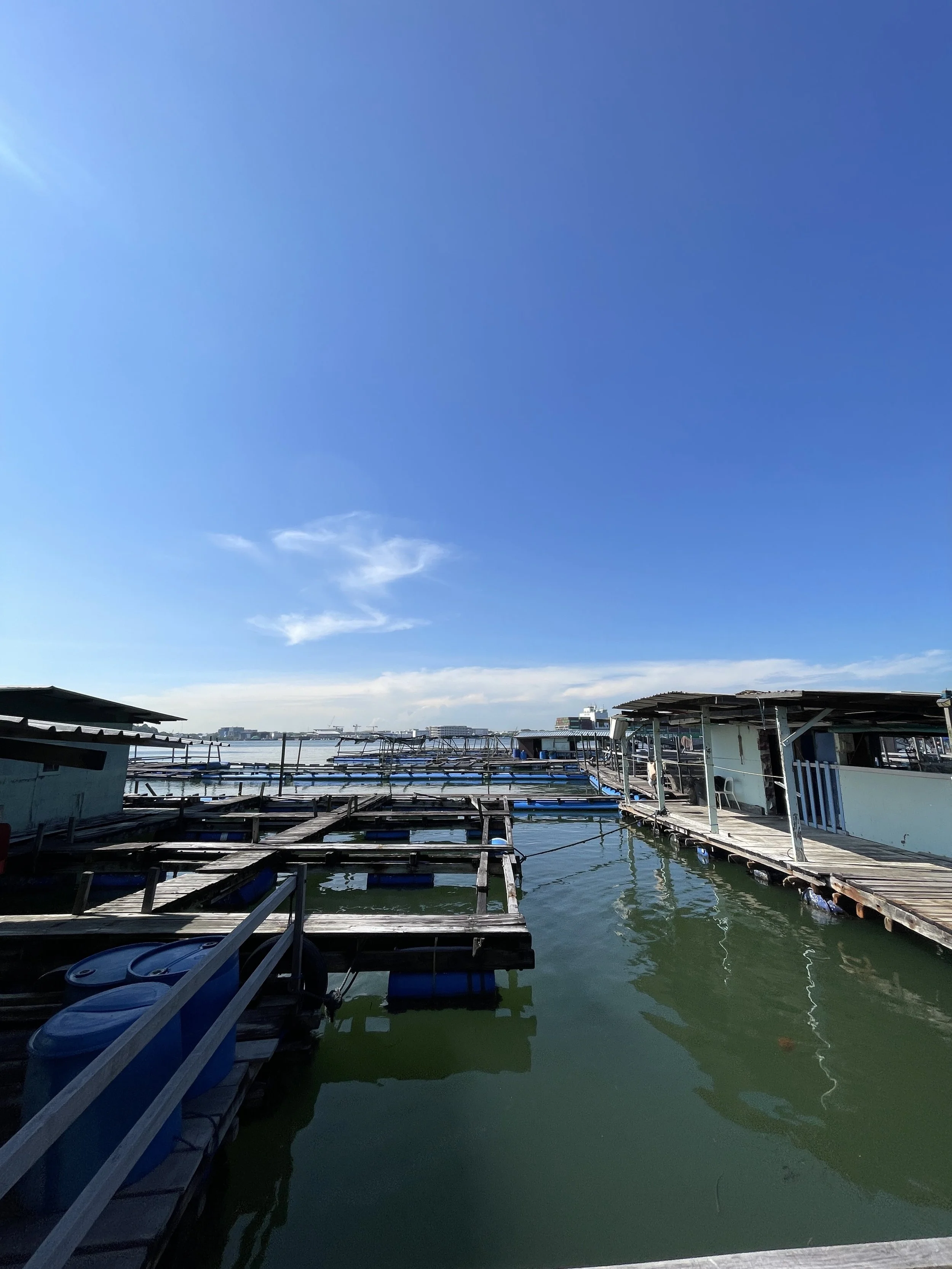
Support for Fish Farms
(Ministry of Sustainability & Environment)
-
Mr Cai Yinzhou asked the Minister for Sustainability and the Environment (a) regarding the closure of 24.5% of sea-based fish farms in 2024, how many of these farms have received Government grants prior to their closure; (b) what is the aggregate value of the grants received by them; and (b) what are the ongoing efforts to reduce the closures of open net cage fish farms.
Ms Grace Fu Hai Yien: Of the 26 sea-based fish farms that exited the industry in 2024, six farms had received close to $700,000 in total of grants to help them enhance their productivity. All of them had met their grant conditions.
The Singapore Food Agency has been partnering farms to enhance their commercial viability through capability and capacity building initiatives. This includes helping farms to strengthen their biosecurity to prevent and control diseases through the Aquatic Animal Health Services and supporting farms in upgrading capabilities and adopting technology through the Agri-Food Cluster Transformation Fund. Given our limited land, resources, and climate change, farms need to be highly productive, climate-resilient and resource-efficient to be commercially viable.
While the number of sea-based farms has decreased, overall productivity of the sector has increased from 38.6 tonnes per hectare per year in 2023 to 40.7 tonnes per hectare per year in 2024.
Link to Hansard: Link
-
Mr Cai Yinzhou asked the Minister for Sustainability and the Environment (a) for the local sea-based fish farm sector, whether there is information on the (i) average age of local farmers and (ii) proportion of workforce who are Singaporeans; (b) if so, what are they; (c) what strategies are there to attract and train local farmers; and (d) what efforts are made to mitigate environmental risks that open cage farms face.
Ms Grace Fu Hai Yien: In 2024, the sea-based fish farming sector has a workforce of approximately 400, of which about half are locals. We do not have data on the average age of local farmers within the sea-based farming sector.
The Singapore Food Agency (SFA) partners with the Institutes of Higher Learning to develop a range of pre-employment training and continuing education and training programmes, to build a local talent pipeline. For instance, in April 2024, SFA worked with Temasek Polytechnic to launch a new Specialist Diploma in Aquaculture Management and Technology. SFA also facilitates job matching to emplace local talents seeking a career in the agri-food sector, by working with WorkForce Singapore and the Employment and Employability Institute.
SFA has been supporting farms, including open-cage farms, to grow food in a more productive, resource-efficient and climate-resilient manner. This includes supporting farms in upgrading capabilities and adopting technology through the Agri-Food Cluster Transformation Fund and strengthening farms' biosecurity to prevent and control diseases through the Aquatic Animal Health Services.
Link to Hansard: Link
-
Mr Cai Yinzhou asked the Minister for Sustainability and the Environment (a) whether the Ministry has data on the proportion of local workers in the sea-based fish farm section who are graduates of local Institutes of Higher Learning or Continuing Education and Training programmes relevant to aquaculture; and (b) what proportion of these graduates are currently employed by existing farms that have received funding under the Agri-Food Cluster Transformation Fund.
Ms Grace Fu Hai Yien: The Singapore Food Agency does not collect data on the number of graduates from local Institutes of Higher Learning or relevant Continuing Education Training Programmes who have joined sea-based fish farms or recipients of the Agri-Food Cluster Transformation Fund.
Link to Hansard: Link
-
Mr Cai Yinzhou asked the Minister for Sustainability and the Environment (a) whether the Ministry has data on the total number of local farms that currently offer public tours or educational visits; (b) if so, what is the breakdown between land-based and sea-based farms; and (c) what enhanced steps and incentives are the Ministry taking to encourage more local farms to offer public engagement activities, strengthening community appreciation and boosting demand for local produce.
Ms Grace Fu Hai Yien: The public can refer to the Singapore Food Agency's (SFA's) website for a non-exhaustive list of local land-based farms that offer farm tours. For public safety and biosecurity reasons, visits to sea-based farms are not encouraged.
SFA has been focusing on supporting the growth of our local farms and raising their productivity, such as through the adoption of technologies. Nonetheless, SFA collaborates with industry and other agencies, such as the Ministry of Education, to raise awareness on the benefits of local produce among the community, such as through educational initiatives in schools on food security and supporting local produce.
Link to Hansard: Link
-
Mr Cai Yinzhou: Before 1940s, Teochew-run kelongs accounted for nearly half of almost 400 sea farms. Today, this heritage is at a crossroads. Between 2023 and 2024 alone, we lost a quarter of open cage fish farms and 74 remain. As a Teochew-nang and all of us as residents of Pulau Ujong, or what some call Mainland Singapore, the nautical way of life is close to our nation’s heart.
Recently, I visited open cage fish farmers offshore with fellow PAP MP Valerie Lee. Farmers shared that while they can meet production targets, they struggle to compete with cheaper imports.
To ensure our farms thrive and as follow up to Parliamentary Questions I have filed, I have three suggestions.
The first, in supporting public accessibility, I note that visits to sea-farms are "not encouraged" due to biosecurity concerns. Will the Government provide technical and financial support to help farms meet these standards? Managed public access is a vital tool for education and brand-building.
Second is tracking the aquaculture talent pipeline. Aquaculture programmes are in ITE, Temasek Polytechnic, Republic Polytechnic, Nanyang Polytechnic and James Cook University (JCU). But Singapore Food Agency (SFA) currently does not collect data on the proportion or age of local sea-farm workers from relevant institutes of higher learning (IHL) or continuing education and training (CET) programmes. I ask the Ministry to reconsider. Without this data, we cannot address the long-term manpower resilience of the sector.
Third, will the Ministry partner with Singapore Tourism Board and National Heritage Board to integrate sea farms into heritage and tourism products? Telling the story behind our food can drive local demand necessary for food security.
Chairman, if sea-based farming is a pillar of our resilience, we must protect its viability. In 10 years, will open-cage fish farming remain part of our food story or merely our history?
Mr Cai Yinzhou: Did you know Singapore has 8,000 kilometres of ABC waterways, 17 reservoirs and yet, only 15 designated fishing spots?
We lament that our children are addicted to screens and thus must do more. To encourage them to spend time outdoors, children and youths I have met in Toa Payoh turn to fishing to manage stress and connect with nature. However, with no designated fishing spots in close proximity, they resort to fishing in unauthorised and often more dangerous areas, areas with high human traffic, fast water currents or precarious physical barriers. Often, youths fishing illegally are met with negative public sentiment or disproportioned aggression.
If we want our youths to be the stewards of our environment and their outdoor safety, we must first allow access to legal and safe interactions. I ask the Ministry to consider opening more designated fishing spots within our reservoirs and waterways by providing convenient and legal access, move away from culture — Thank you.
Mr Zaqy Mohamad: Ms Lee Hui Ying and Mr Cai Yinzhou asked how we will support and promote awareness of our local farms. We are helping farms to increase productivity and reap economies of scale, we are helping them to build capabilities, strengthen supply resilience of agri-inputs and enhance demand offtake.
The first tranche of the Agri-food Cluster Transformation (ACT) Fund, launched in 2021, has shown that Singapore farms can transform into advanced farming operations that are of higher yield, that are more pest- and disease- resilient, and increasingly climate-resilient too.
Since its launch, we have awarded $55 million to nearly 150 projects. The Fund has enabled both agri- and aqua-farms to adopt everything from simple, small-scale technologies, like LED grow lights, automated feeders and automated irrigation systems that reduce manual labour, to large-scale farming systems in climate-controlled environments that guarantee year-round production regardless of the weather.
Take Singapore Aquaculture Technology as a good example of this transformation. Using ACT Fund support, instead of adopting conventional open cage fish farm technologies, they deployed a closed containment aquaculture system. What is the outcome? They now operate at three times the productivity of conventional sea-based fish farms and in using closed containment aquaculture system, they face lower risk from environmental hazards, such as algal blooms. Closed containment aquaculture system technology is still nascent and requires industry readiness.
Thus, to Ms Nadia Ahmad Samdin's question, it will take time for the local industry to adopt systems such as closed containment aquaculture system. The Singapore Food Agency (SFA) will continue to support farms who are keen and ready for this transition.
Another beneficiary of the ACT Fund is Yili Farm who upgraded their cultivation systems to optimise layout, improve crop protection and integrate with their centralised nursery and irrigation system. This enabled faster crop cycles and a 20% increase in productivity. These developments give us confidence to enhance the Fund to support our farms further.
Today, I am announcing a new tranche of funding of $70 million under the ACT Fund 2. This will be made available from April 2026, over five years, and it represents our largest industry scheme to date to support technology adoption and local agriculture capability and capacity building.
At the same time, it will introduce a new funding component – the Industry Partnerships for Capability Transformation Grant. This is in response to feedback from the industry on the need for collaborative approaches to tackle common challenges, such as limited economies of scale and supply chain inefficiencies.
This new scheme will co-fund strategic partnerships between farms and ecosystem players on the development and deployment of industry-wide solutions that can support multiple farms. Examples will include farms and industry players collaborating on integrated delivery systems which streamlines the process from farm-to-market, reducing transportation cost and improving product freshness.
For the aquaculture sector, we will also support both sea-based and land-based farms to adopt newer technologies to improve productivity and consistency of output through demonstration projects. One example is the automated vaccination of fingerlings which can reduce labour intensity. Successfully demonstrated technologies can subsequently be adopted by the industry via the ACT Fund 2.
Beyond technology, quality agri-inputs, such as eggs, fingerlings and feed, are fundamental to success for aquaculture. Today, farms source a majority of their fry and fingerling from overseas sources with less consistent quality and lower survival rates due to the long transport stress.
In November 2024, we introduced the National Broodstock Centre and Hatchery Development and Recognition Programme to supply our farms with high quality eggs and fingerlings, with higher survival and grow-out rates. The National Broodstock Centre produces disease-free broodstock that commercial hatcheries then develop into high quality fingerlings under strict biosecurity standards.
For farms, this translates directly into better profitability. These premium fingerlings grow faster, survive better and they convert feed more efficiently. That means that farms reach market quicker with lower feed costs and fewer losses.
We started out with Asian Seabass and have since successfully expanded into Marine Tilapia. Five hatcheries have been recognised under the Hatchery Development and Recognition Programme and can now access quality seabass eggs and marine tilapia brooder fingerlings from the National Broodstock Centre. This year, we will expand our national breeding programme to include Red Snapper and work towards industry-led efforts to increase the supply of Whiteleg shrimp larvae and grouper fingerlings.
High-quality eggs and fingerlings set the foundation, but health and nutrition inputs determine whether farms achieve optimal growth and disease resistance. SFA's new Integrated Hatchery Support Programme will help local hatcheries adopt specialised feeds and quality vaccines that maximise the growth potential of the high quality fries or fingerlings. And this will be done through demonstration trials to build farm's confidence in investing in better quality input.
Together, the National Broodstock Centre, Hatchery Development and Recognition Programme and Integrated Hatchery Support Programme create a reinforced aquaculture value chain for both sea-based and land-based farms that improve fry quality, increase yields and sharpen competitiveness.
Our offtake programmes have been making progress for the food types that matter most to Singapore's food resilience – and we aim to do better. Central to this effort is the Singapore Agro-Food Enterprises Federation (SAFEF), which has become the critical demand aggregation engine that matches our farms' production capacity with local needs.
Ms Nadia Ahmad Samdin asked about the effectiveness of SAFEF's demand aggregation efforts. SAFEF has created sustainable brands like "The Straits Fish" and "SG Farmers' Market" now stocked in major supermarkets – FairPrice, Sheng Siong, Cold Storage and Giant, bringing local produce closer to the community. Public response has been encouraging. For example, the sales for xiao bai cai under the "SG Farmers' Market" brand have increased about sevenfold since its launch in May 2024.
We are expanding the demand aggregation model in 2026 with more product varieties and The Straits Fish marine tilapia ready-to-eat products. SAFEF will also partner more food and beverage (F&B) players to integrate SG Farmers' Market® product range in their menus. This effort aims to facilitate farms’ mainstream market penetration by connecting retail demands with a fragmented local farm supply chain. And this is just due to our small agriculture sector. In aggregated offtake programmes, we give farms the sales certainty they need to scale production. At the same time, supermarkets, hotels and caterers are given the confidence in a guaranteed reliable local supply for them to commit shelf space and marketing support.
The effectiveness of our Singapore Food Story also depends on our readiness to respond swiftly to disruptions. SFA is strengthening early warning systems to provide greater lead time for action. Our new risk monitoring dashboard and food supply visibility tool, developed with PSA BDP, provides early warnings of developments that may affect food imports and strengthens Singapore's upstream food supply chain visibility. This tool has already proven its value – it expedited our risk assessments during Brazil's Avian Influenza outbreaks in May last year and the recent conflict in the Middle East.
For aquaculture, we are upgrading our Harmful Algal Bloom Prediction Model to integrate forecasted weather conditions for more accurate environmental predictions. This will alert farms ahead of anticipated events so that they can implement mitigation measures like aeration or emergency harvests to minimise stock losses.
Together, these initiatives strengthen SFA's ability to assess, plan and mitigate supply disruption risks before they impact Singapore's food resilience. I thank Mr Foo Cexiang for his suggestions on our food pillars. Strong supply chain logistics are indeed a critical backbone for resilience. We will continue to work closely with relevant agencies and industry, including to consider your suggestions.
Chairman, building Singapore's food resilience requires all of us to move beyond individual interests and act with collective urgency. The Government will continue doing our part – be it investing in the ACT Fund 2, expanding the National Broodstock Centre, creating offtake programmes with SAFEF and strengthening early warning systems. But we cannot secure our food future alone.
I hope that businesses do more to support our local food production and our overall Singapore Food Story 2 efforts. Diversify your supply sources and commit to local production as a strategic buffer. Supermarkets should expand local produce shelf space, restaurants should join our Farm-to-Table Recognition Programme and food manufacturers should partner with SAFEF to develop local supply chains.
When you choose local suppliers, you are helping to invest in Singapore's food resilience that will protect your business during the next major disruption or major pandemic scenario. For consumers, your choices shape our collective resilience. Choose local produce even if it costs slightly more and be more flexible with our food choices during crises and shortages. That premium we pay for our local produce is our insurance for reliable food supply when things fail.
Chairman, our founding fathers understood that Singapore's survival depends on collective action over individual interests. As our founding Prime Minister often said, we must leave nothing to chance when it comes to Singapore's survival. Today, we apply that same principle to food resilience with the Singapore Food Story 2 – building comprehensive resilience through collective action, because our food future is too important to leave to chance alone.
-
Mr Cai Yinzhou asked the Minister for Sustainability and the Environment (a) with 24.5% sea-based fish farms exited and seafood production declining 14% whilst productivity rose from 38.6 to 40.7 tonnes per hectare in 2024, whether this productivity increase reflects genuine improvement or is driven by farm exits; (b) how many sea-based fish farms closed in 2025; and (c) what is the median productivity of the seafood sector per year from 2023 to 2025.
Ms Grace Fu Hai Yien: The improvement in productivity of Singapore's aquaculture sector reflects both farm exits and gains in farm productivity. The 2025 data will be published later this year as part of the Singapore Food Statistics 2025.
Link to Hansard: Link
-
Mr Cai Yinzhou asked the Minister for Sustainability and the Environment (a) why the Ministry does not track whether graduates from institutes of higher learning (IHLs) and Continuing Education and Training (CET) aquaculture programmes enter sea-based farms; (b) whether the Ministry will work with IHLs to establish a graduate-to-sector tracking mechanism similar to those in healthcare and teaching; and (c) what projected workforce demand figures are used to calibrate aquaculture training intake across IHLs.
Ms Grace Fu Hai Yien: The Singapore Food Agency's (SFA's) focus has been on tracking farm productivity and helping farmers achieve higher levels of productivity, rather than specifically tracking whether graduates from aquaculture programmes join farms.
While we do not track graduates' employment outcomes, SFA works with local institutes of higher learning (IHLs), such as Temasek Polytechnic and Republic Polytechnic, to develop aquaculture capability within our local farming workforce. This includes shaping programme curricula and facilitating industry internships. SFA also projects manpower needs based on industry developments, such as farm openings, potential scale-ups and recruitment plans of existing farms and provides regular inputs to IHLs and relevant Government agencies, such as the Ministry of Education, to inform adjustments to programme intakes for related fields of studies.
Link to Hansard: Link