New membership structure for National Council of Social Service among changes to Act
Reposted from Source: The Straits Times
Read the Chinese version (点击这里阅读中文版): Click Here
Published: 13 January 2026 03:10 PM (Updated: 14 January 2026 03:35 PM)
Author: Christine Tan
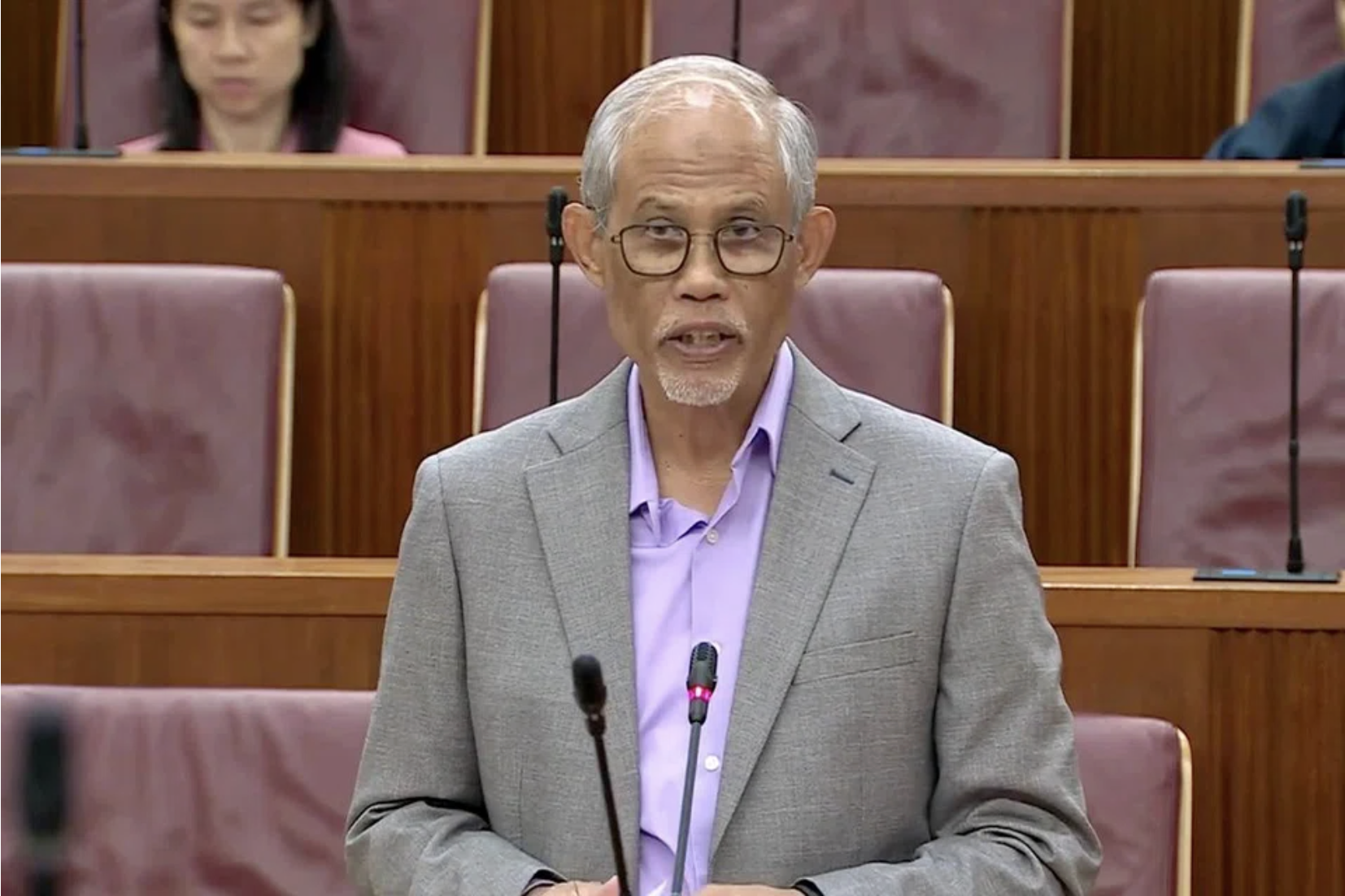
Social needs have become increasingly complex and the broader ecosystem supporting social services has expanded, says Minister for Social and Family Development Masagos Zulkifli. (Source: The Straits Times)
SINGAPORE – Only organisations that primarily provide social services, or directly support the provision of such services, will be members of the National Council of Social Service (NCSS), with a new plan to better reflect its expanded role.
The change means some organisations may no longer be members of NCSS, a statutory board under the Ministry of Social and Family Development (MSF) involved in developing the social service sector in Singapore.
This is one of the proposals in the NCSS (Amendment) Bill, which was passed in Parliament on Jan 13. The changes will take effect in August.
Minister for Social and Family Development Masagos Zulkifli said in Parliament that social needs have become increasingly complex and the broader ecosystem supporting social services has expanded.
Apart from social services agencies, there are now social enterprises, corporates and philanthropic organisations, he said.
Mr Masagos said the Government and NCSS have partnered more closely over the years to support the sector, playing distinct yet complementary roles.
While MSF leads the development of social policies, NCSS has taken on a larger role as sector developer, he said. To fulfil this expanded role, the statutory board has received full funding for its core functions from the Government since 2022.
The NCSS Act has remained largely unchanged since it was enacted in 1992, said Mr Masagos. “Given the significant shifts in our social service landscape, MSF and NCSS reviewed how NCSS should be best positioned to continue serving the sector effectively.”
NCSS will be given functions and powers in the Act to pursue three aims: strengthening the delivery of social services, building sector capability, and developing the broader social service ecosystem.
Single-tier membership
In its current three-tier membership structure, full members provide direct social services, while associate members have an active interest in social service but do not directly provide such services. Honorary members are those who have rendered outstanding social service.
NCSS membership comes with funding and networking opportunities, and having access to consultancy and legal services at lower rates, among other benefits.
As at end-2025, it has 428 full and 99 associate members, and no honorary members, said an NCSS spokeswoman in response to queries from The Straits Times.
The Bill proposed to change this structure to a single-tier sector membership.
Membership fees – about $140 per year for full members and $54 for associate members – will be scrapped.
NCSS’ operations will continue to be supported by the Government and other funding sources.
Explaining the change, the spokeswoman said NCSS’ membership today includes organisations whose core activities are unrelated to the social service sector.
“As one of NCSS’ key functions is to strengthen social service delivery, the criteria for sector membership will focus on organisations whose primary function is to provide, or directly support the provision of, a social service in Singapore,” she said.
Mr Masagos said this refers to programmes that improve the welfare of vulnerable or disadvantaged persons in Singapore or support the emotional and psychological well-being of the local community, such as through family counselling and financial assistance.
He added that all full members, which make up the majority of NCSS’ membership today, will qualify to be sector members.
Groups that directly support the provision of social services, including professional bodies for social service workers or organisations that mobilise resources, are also eligible, he said.
“Most member organisations will experience minimal impact to their day-to-day membership experience,” said the minister.
He added that agencies can still tap NCSS’ grants and support if their work aligns with its priorities, even if they are not sector members.
NCSS will honour all existing support given to current member organisations until the end of the support duration, said Mr Masagos.
Mr Martin Tan, chief executive of philanthropic organisation The Majurity Trust – an associate member of NCSS – said it may still be considered a sector member under the new structure.
“We do have a part to play in the overall ecosystem, because a large part of how we see philanthropy is about capacity-building, ecosystem-building,” he said.
Mr Tan believes the definition of sector membership is wide enough. For groups that do not meet the requirements, there may be ensuing conversations about their relevance, he added.
Minister-appointed council
Another change will see NCSS’ 23-member board replaced with a council fully appointed by the Minister for Social and Family Development.
At least half of the 15- to 27-member council must be nominated by sector members, with each term running for three years instead of the current two.
The existing NCSS board is half elected by member organisations and half appointed by its president.
Leaders and employees of sector members can also join the council with changes to the Act, which currently states that they cannot join the board.
“(This move) aims to ensure that the sector’s diversity, vibrancy and voice are reflected in the council, and it possesses an optimal mix of skills, experience and knowledge to guide NCSS’ work,” said the NCSS spokeswoman.
Samaritans of Singapore CEO Gasper Tan supported the move, noting that the current election system may result in a “popularity contest” or too many people from one sector on the board.
Commending the decision to allow employees with ground expertise to join the council, he added that leaders of social service agencies know the “heartbeat of the sector” and its needs.
NCSS said the amendments were shaped through engagements with its members and a public consultation.
Mr James Tan, CEO of TOUCH Community Services – which joined the engagement sessions – said NCSS had been a sector developer in many respects even before these changes.
Addressing complex social issues often requires drawing on the strengths of multiple agencies, he said. “The proposed changes to the NCSS council would help ensure a stronger pulse on ground realities and enhance strategic decision-making.”
Concerns about membership criteria and innovation
Of the 12 MPs who spoke during the Bill debate, several, including Ms Lee Hui Ying (Nee Soon GRC) and Mr Cai Yinzhou (Bishan-Toa Payoh GRC), sought more clarity on sector membership.
Mr Cai asked whether social enterprises would be eligible, to which Mr Masagos said applications would be assessed on a case-by-case basis, in consultation with the Singapore Centre for Social Enterprise, or raiSE.
Mr Yip Hon Weng (Yio Chu Kang) asked if agencies that challenge policy gaps could be seen as acting against public interest and risk having their membership revoked.
Assuring MPs that constructive conversations will continue, Mr Masagos said: “In fact, we welcome diverse views and suggestions, including surfacing challenges and gaps in existing policies and programmes, that can help us strengthen the ecosystem.”
Applicants who dispute a decision on sector membership can appeal, he added.
Ms Denise Phua (Jalan Besar GRC) raised concerns that NCSS’ expanded role could lead to over-centralisation and affect innovation in the sector. Mr Masagos said support for innovation will not change with the Bill.
He added: “NCSS will continue to take a principled and risk-proportionate approach to governance, to promote innovation and reduce red tape, while maintaining high standards of accountability.”
Source: The Straits Times
